Enrollpoint
Transforming a legacy enrollment tool into a clear, efficient, agent-first platform that improved speed, accuracy, and daily usability.
Client:
Florida Blue
Industry:
Healthcare
Focus:
Product design, Documentation
Context:
2020
Overview
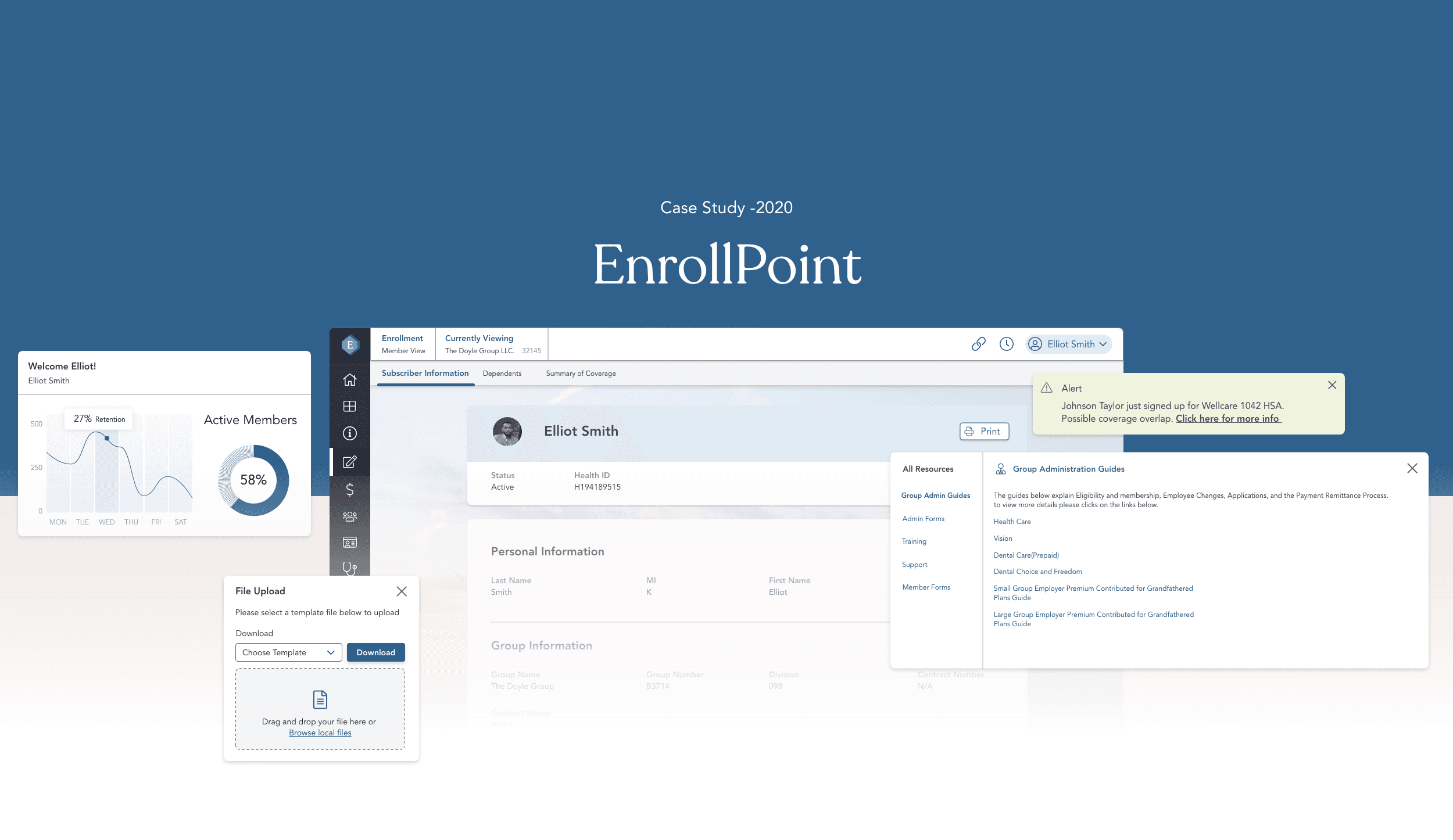
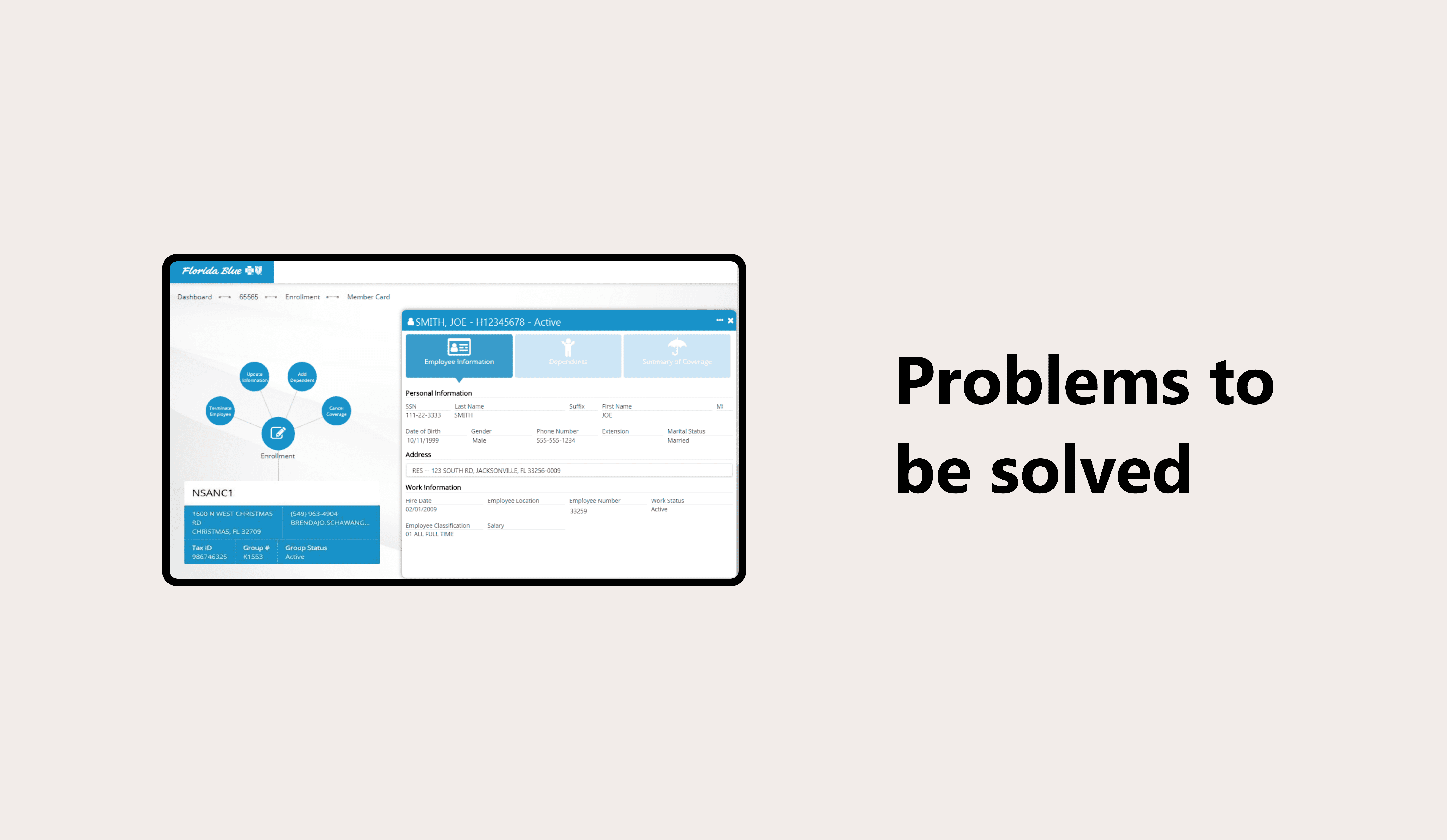
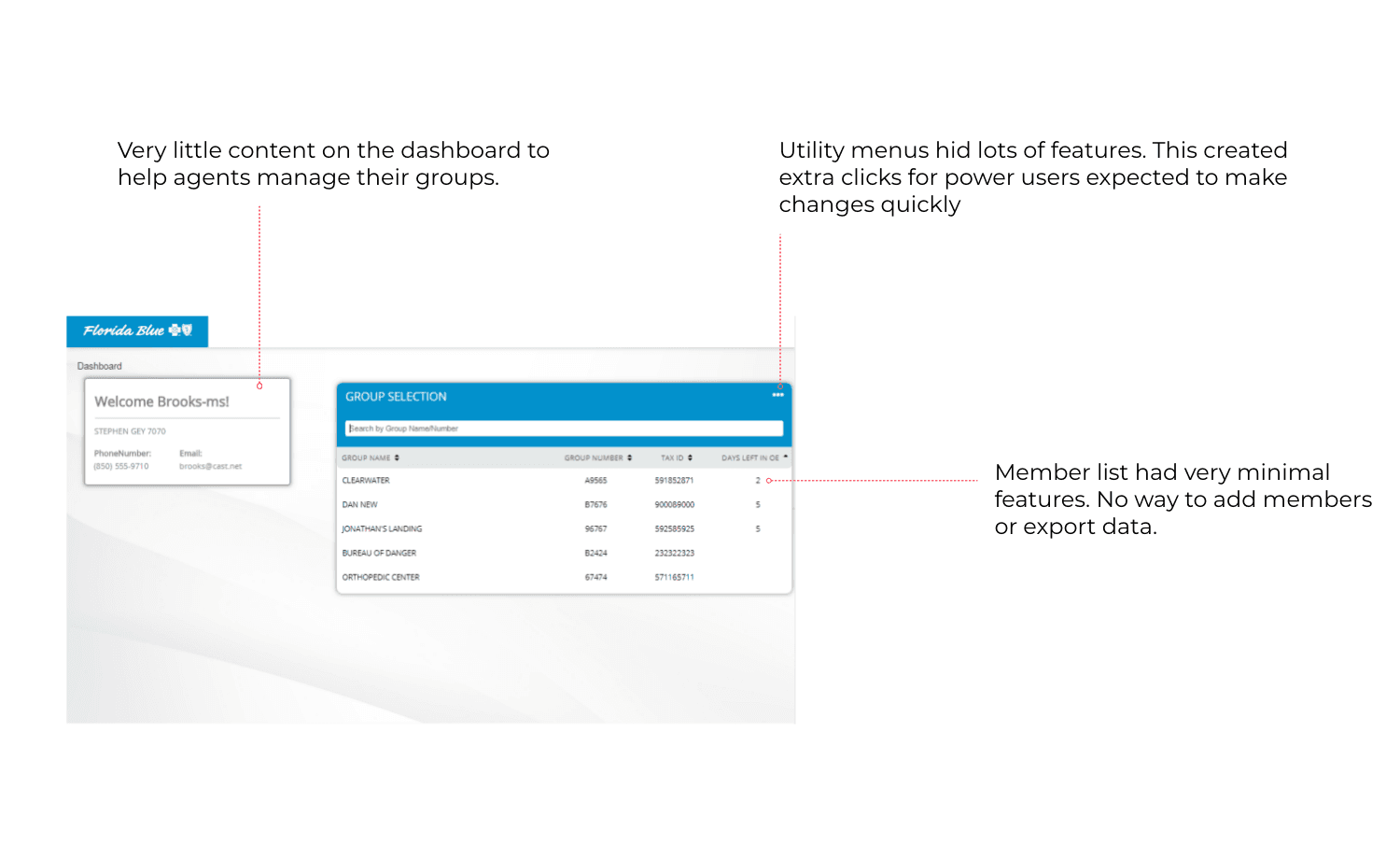
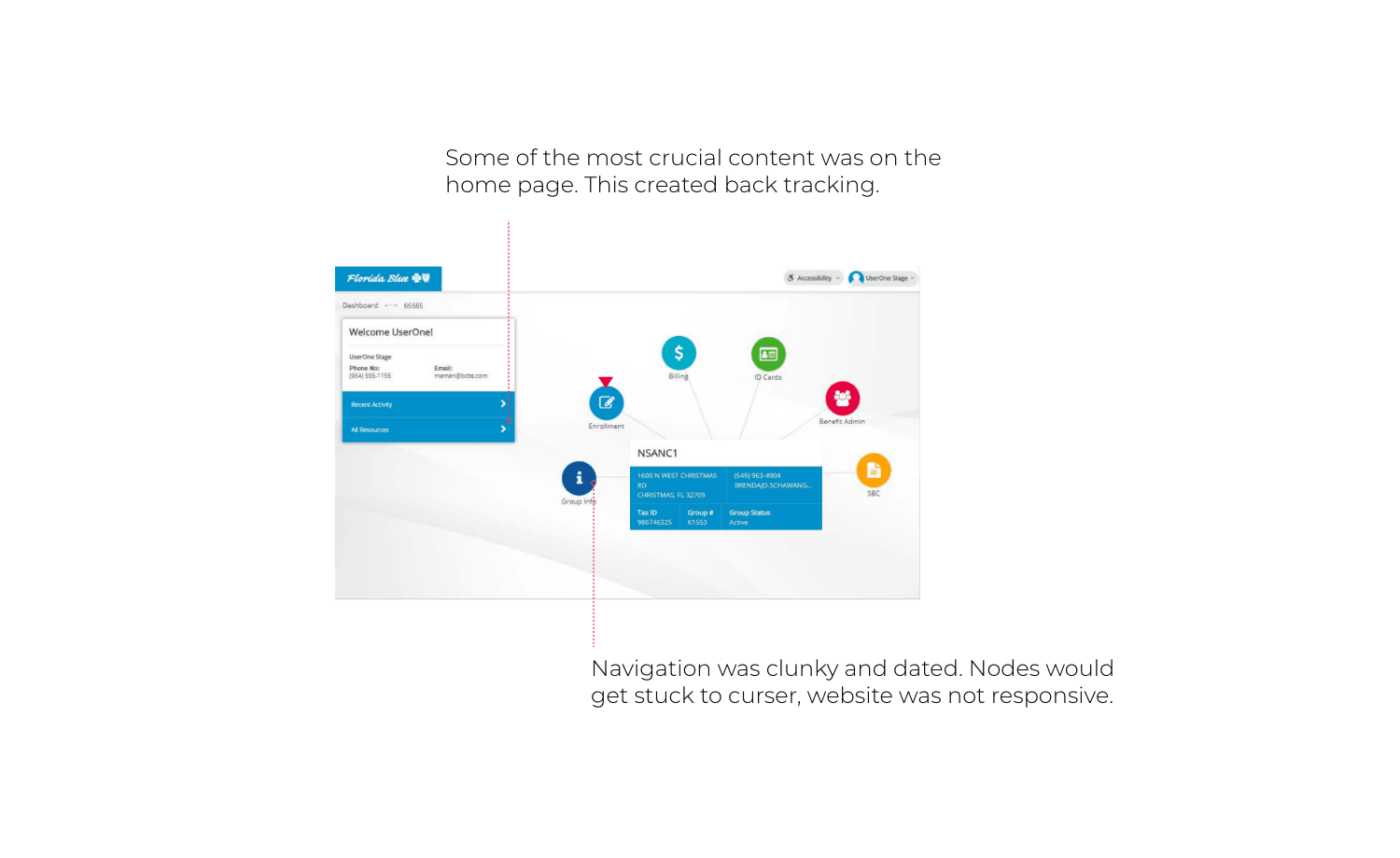
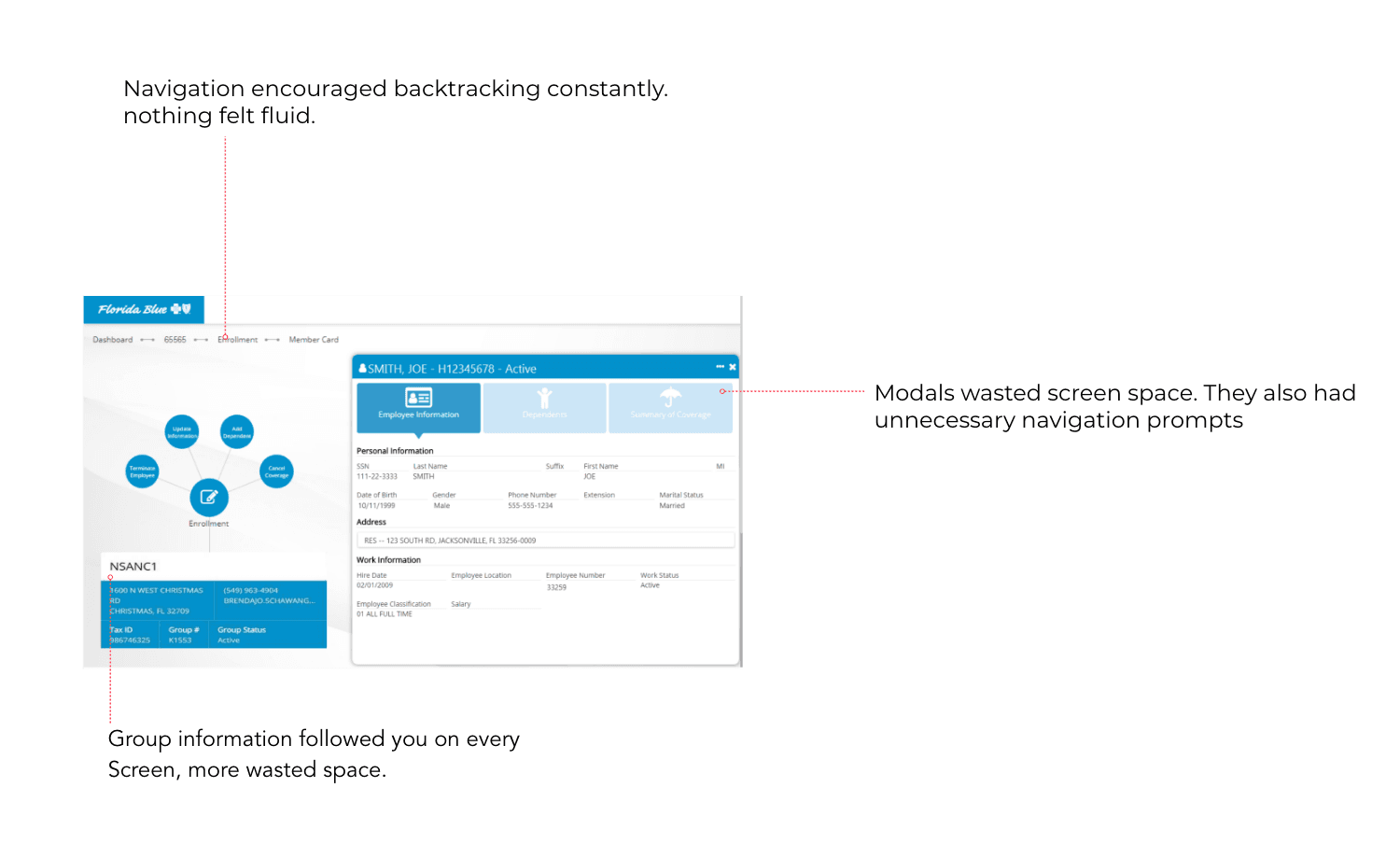
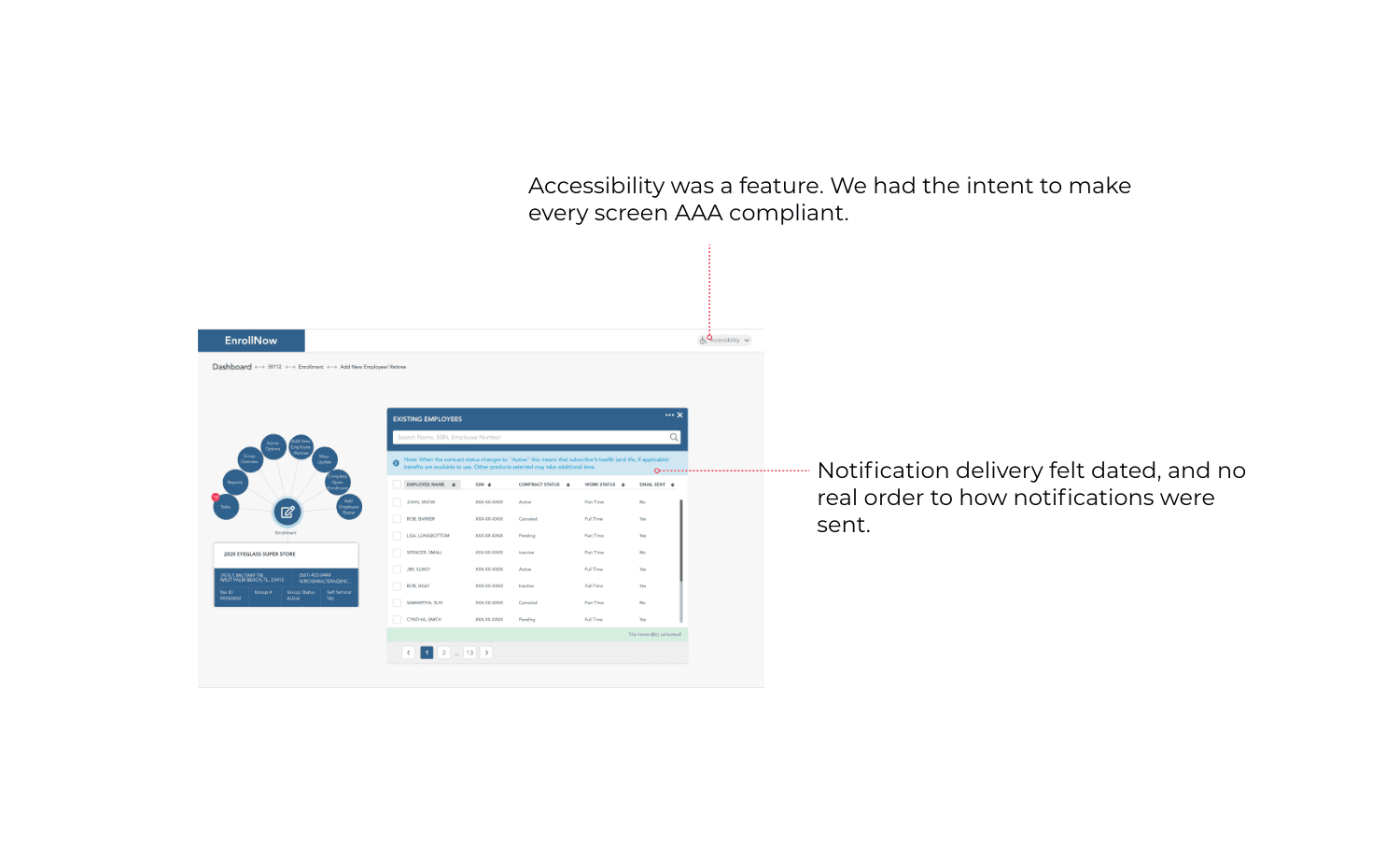
EnrollPoint was Florida Blue’s decade-old enrollment system used by agents to manage onboarding and group administration. It had grown cluttered, inconsistent, and difficult to use, slowing down critical workflows across the business. I worked with a Design Lead, engineers, and analysts to modernize the platform and create a clearer, more intuitive experience for the agents who relied on it daily.
Overview
EnrollPoint was Florida Blue’s decade-old enrollment system used by agents to manage onboarding and group administration. It had grown cluttered, inconsistent, and difficult to use, slowing down critical workflows across the business. I worked with a Design Lead, engineers, and analysts to modernize the platform and create a clearer, more intuitive experience for the agents who relied on it daily.
Overview
EnrollPoint was Florida Blue’s decade-old enrollment system used by agents to manage onboarding and group administration. It had grown cluttered, inconsistent, and difficult to use, slowing down critical workflows across the business. I worked with a Design Lead, engineers, and analysts to modernize the platform and create a clearer, more intuitive experience for the agents who relied on it daily.
Outcome
EnrollPoint launched in April 2020 and quickly improved how agents worked across the organization. The new workflow reduced backtracking, lowered support needs, and made onboarding significantly faster and more predictable. Adoption was immediate, and teams reported a noticeable improvement in day-to-day efficiency.
Percent faster onboarding
+42%
Fewer errors
-38%
Smoother workflows
+52%
Outcome
EnrollPoint launched in April 2020 and quickly improved how agents worked across the organization. The new workflow reduced backtracking, lowered support needs, and made onboarding significantly faster and more predictable. Adoption was immediate, and teams reported a noticeable improvement in day-to-day efficiency.
Percent faster onboarding
+42%
Fewer errors
-38%
Smoother workflows
+52%
Outcome
EnrollPoint launched in April 2020 and quickly improved how agents worked across the organization. The new workflow reduced backtracking, lowered support needs, and made onboarding significantly faster and more predictable. Adoption was immediate, and teams reported a noticeable improvement in day-to-day efficiency.
Percent faster onboarding
+42%
Fewer errors
-38%
Smoother workflows
+52%
How we solved problems

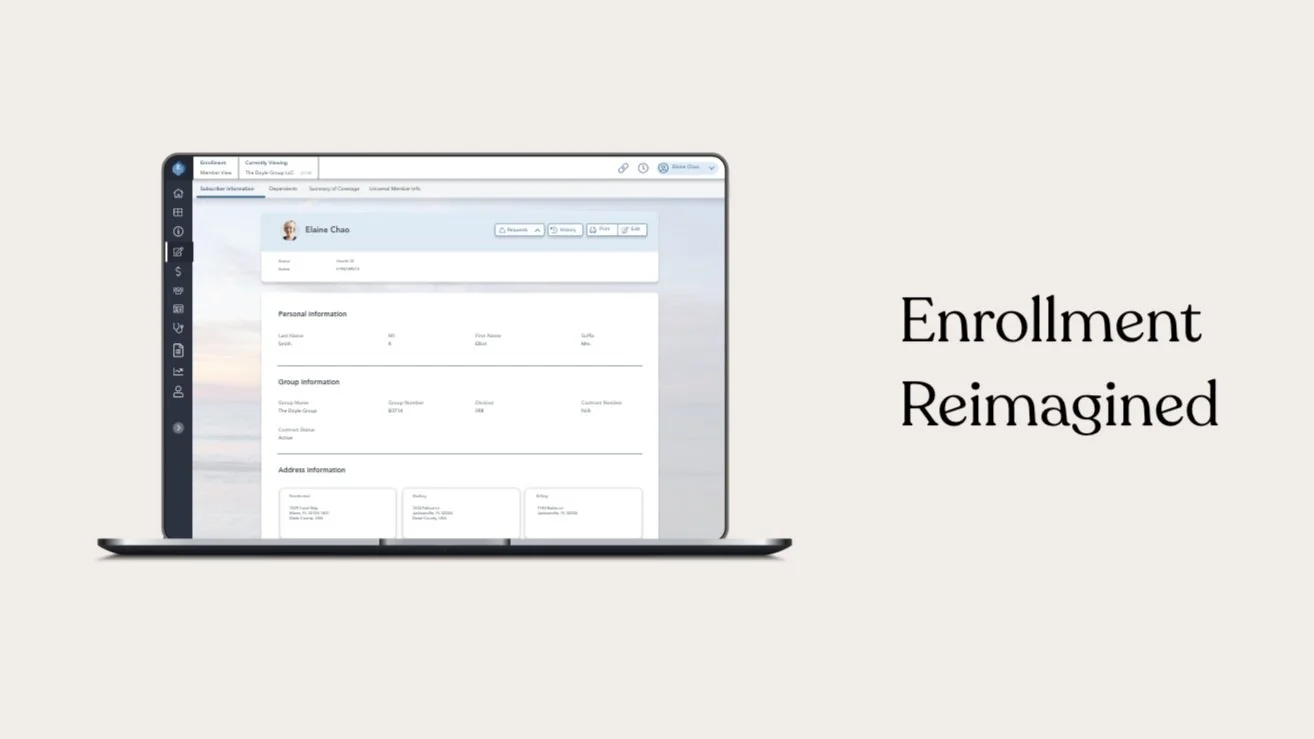
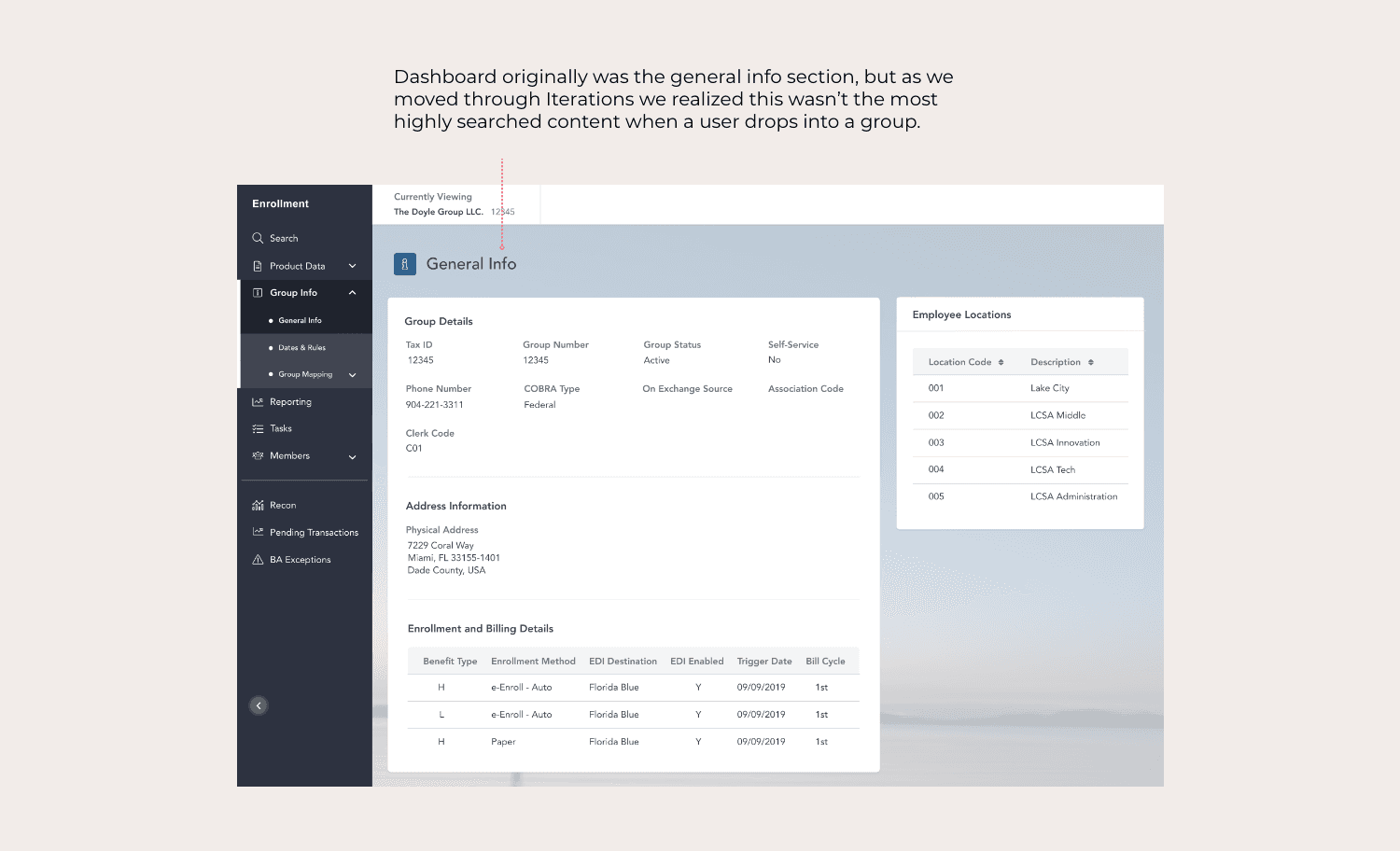
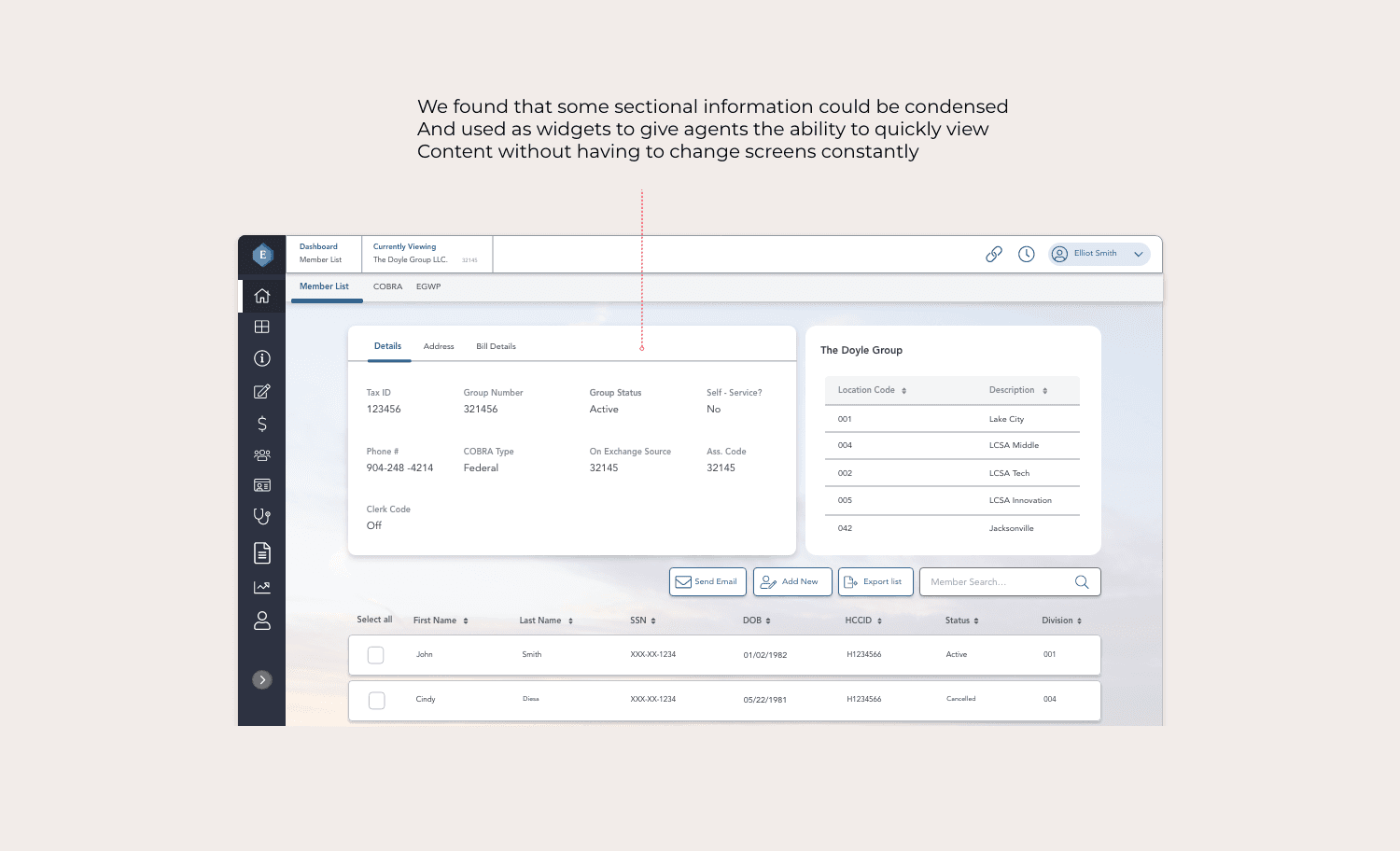
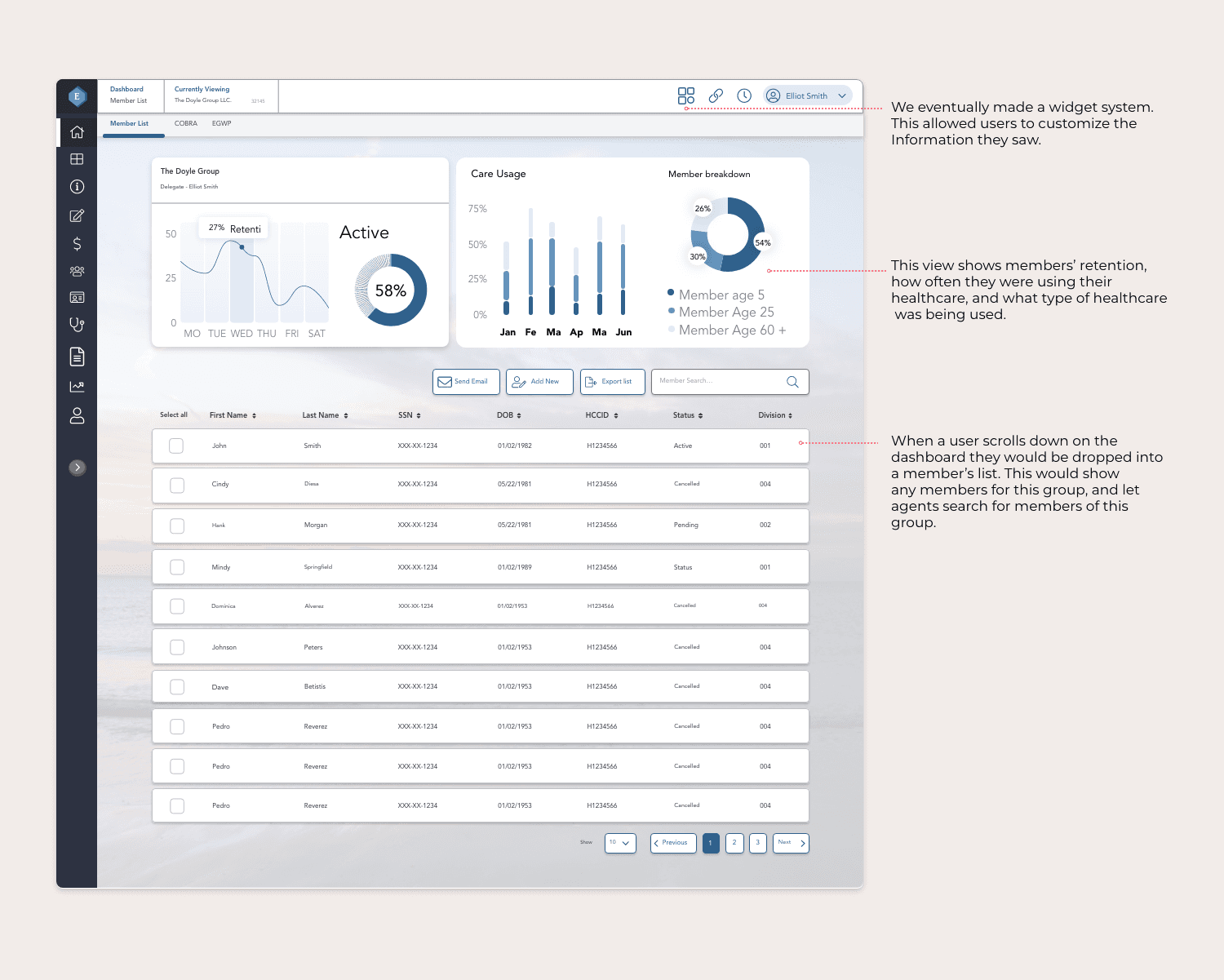
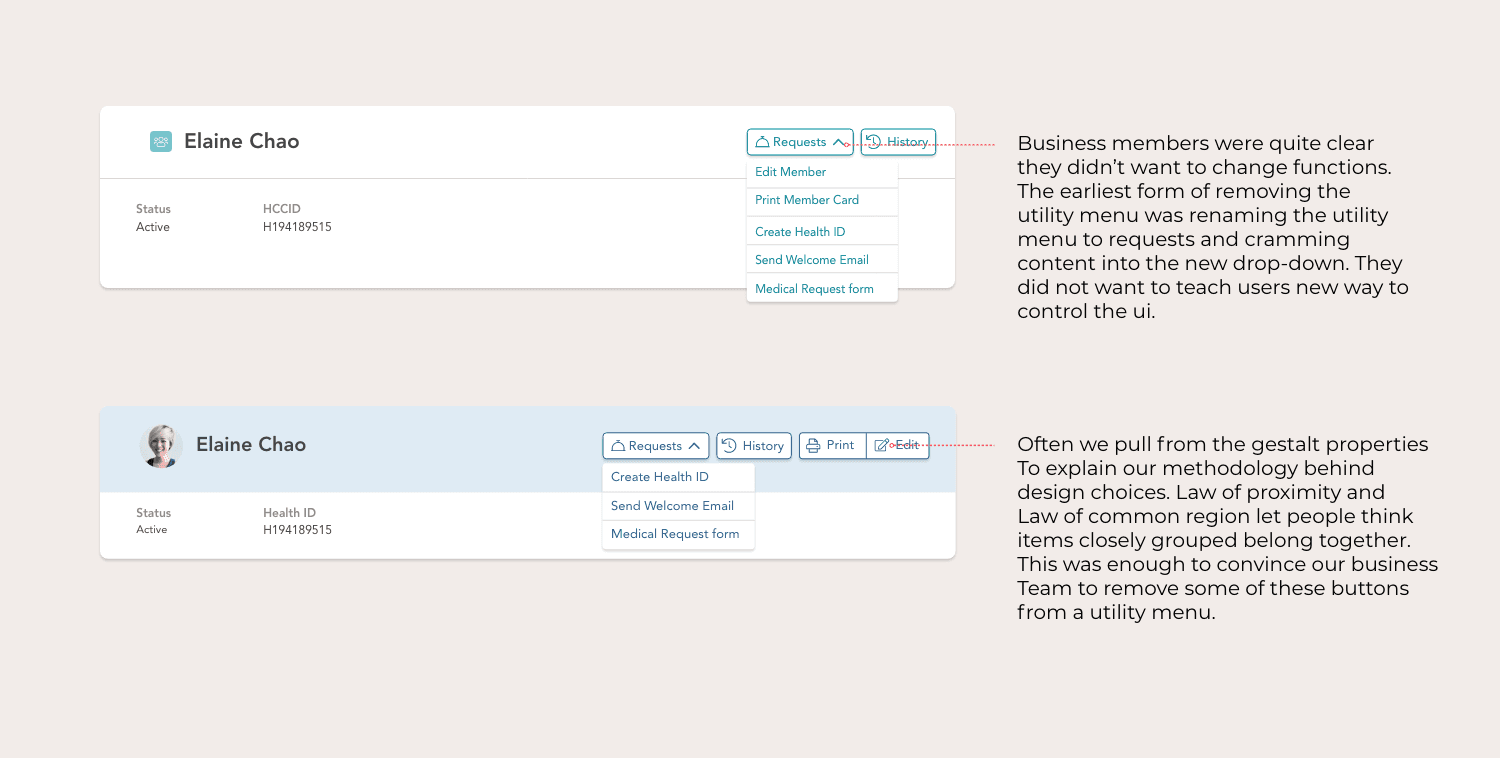
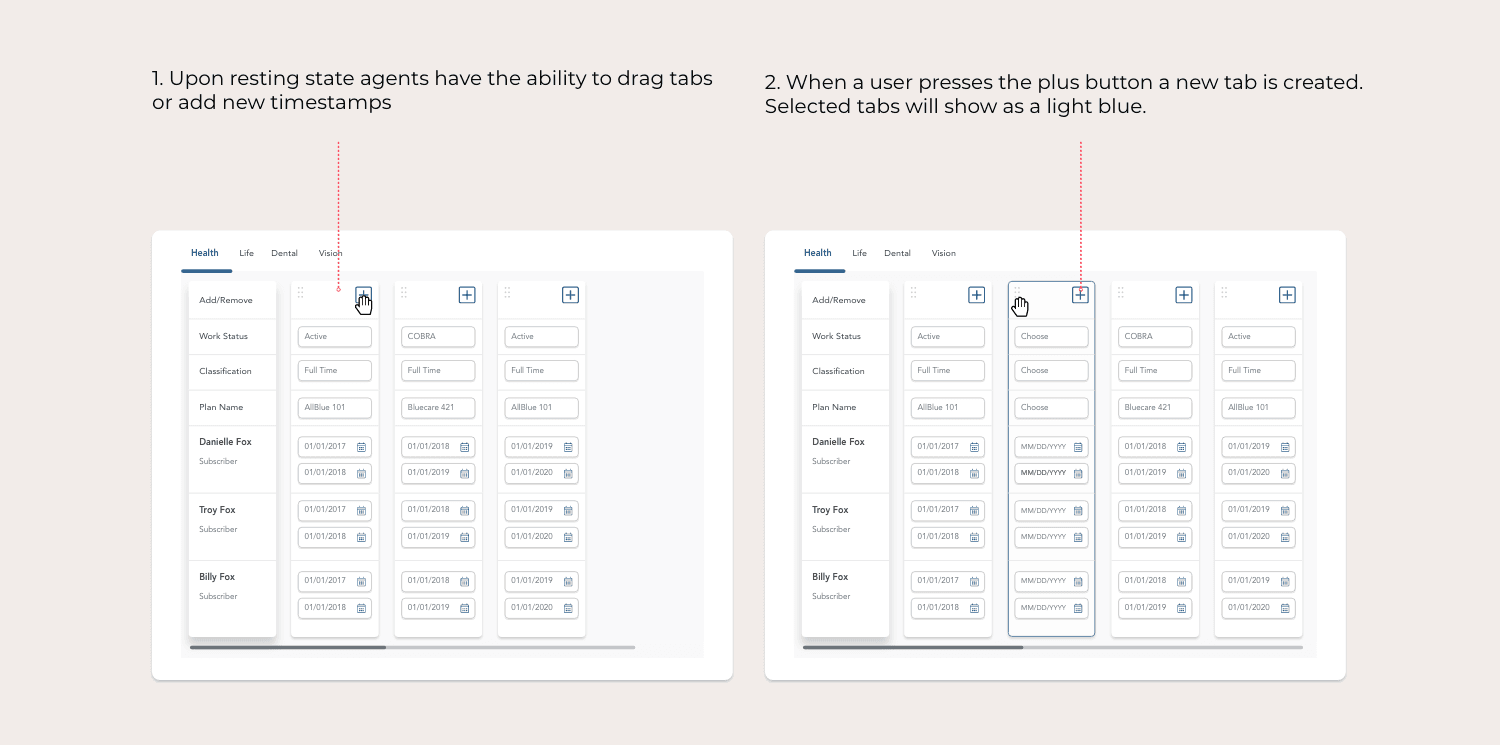
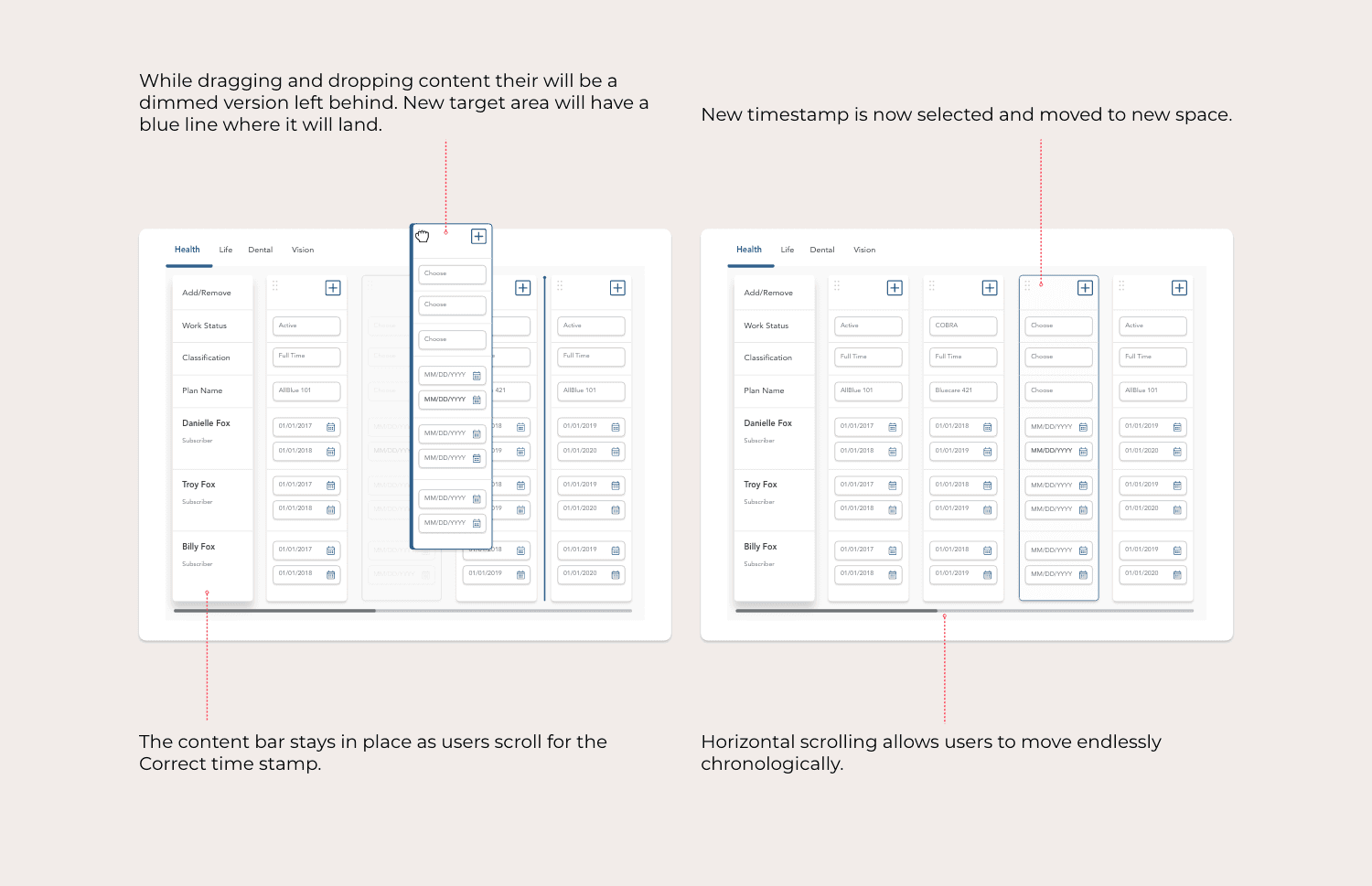
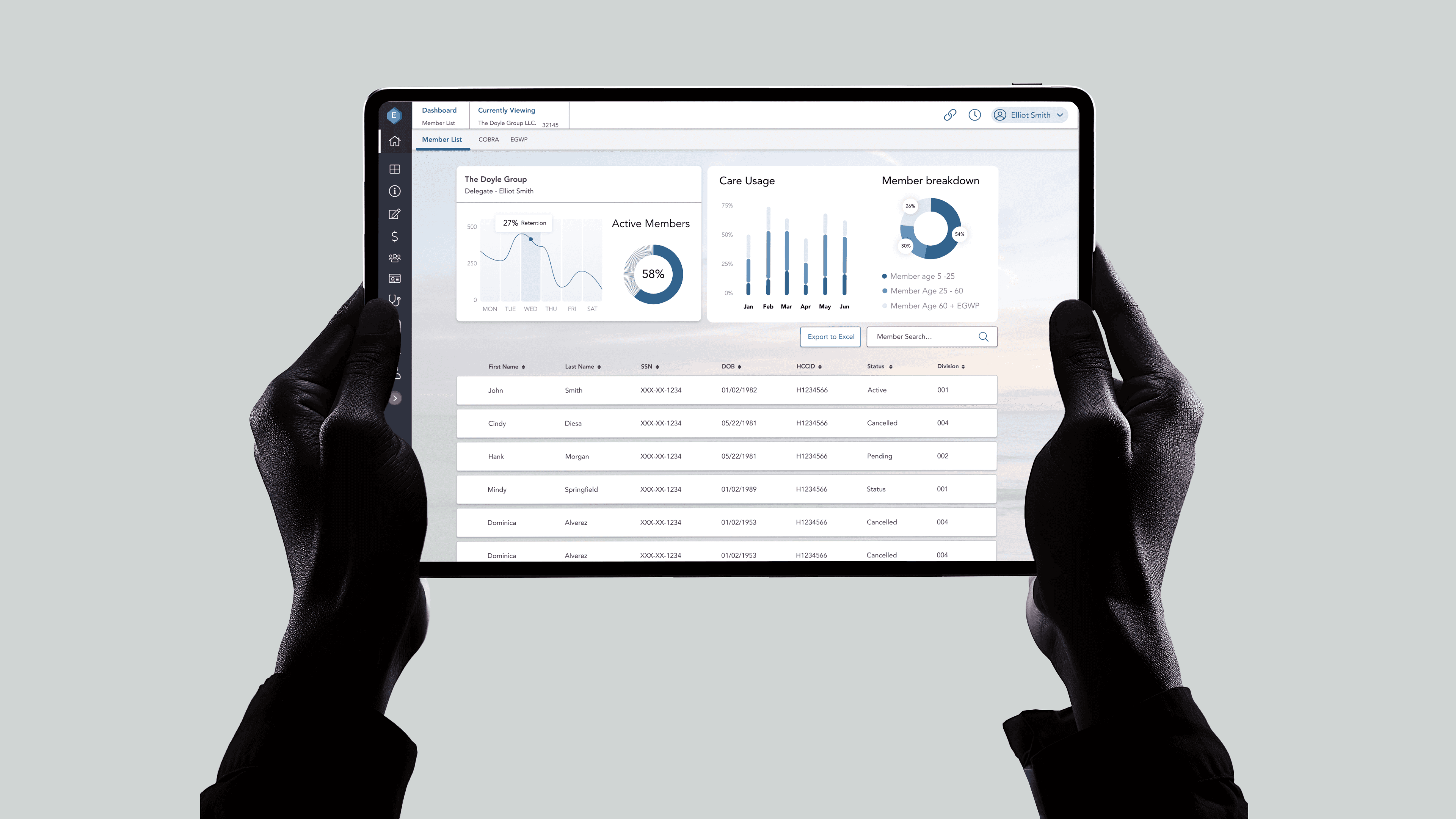
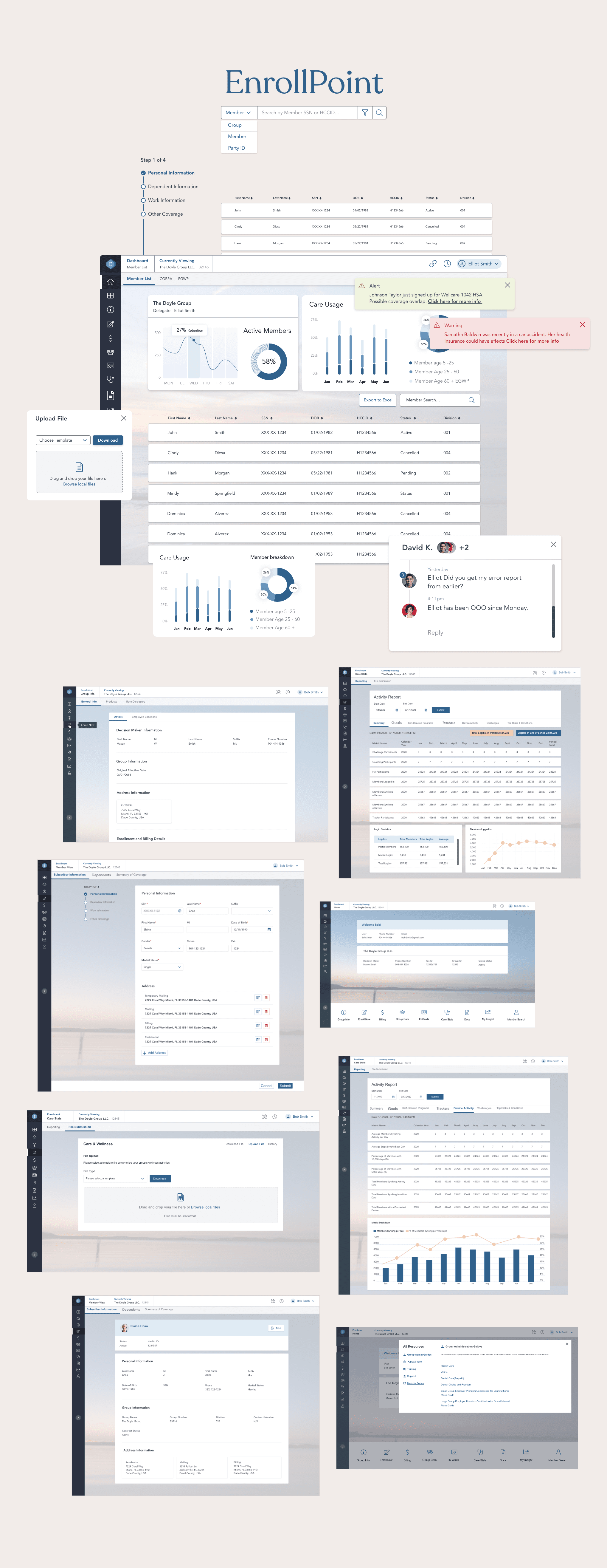
We redesigned the platform around clarity and predictability. Navigation was simplified with contextual, in-flow actions that eliminated unnecessary backtracking. Onboarding became a guided vertical flow that advanced naturally through sections. We restructured space for high-volume tasks, introduced a chronological time-stamping model for accurate member updates, and rebuilt the dashboard into modular widgets that surfaced key information without screen hopping. The result was a faster, more intuitive system that supported real agent behavior.
How we solved problems
We redesigned the platform around clarity and predictability. Navigation was simplified with contextual, in-flow actions that eliminated unnecessary backtracking. Onboarding became a guided vertical flow that advanced naturally through sections. We restructured space for high-volume tasks, introduced a chronological time-stamping model for accurate member updates, and rebuilt the dashboard into modular widgets that surfaced key information without screen hopping. The result was a faster, more intuitive system that supported real agent behavior.
How we solved problems
We redesigned the platform around clarity and predictability. Navigation was simplified with contextual, in-flow actions that eliminated unnecessary backtracking. Onboarding became a guided vertical flow that advanced naturally through sections. We restructured space for high-volume tasks, introduced a chronological time-stamping model for accurate member updates, and rebuilt the dashboard into modular widgets that surfaced key information without screen hopping. The result was a faster, more intuitive system that supported real agent behavior.
What I learned
This project reinforced how critical it is to simplify legacy systems around real user workflows, not inherited structures. We learned to define a focused MVP early, collaborate closely with engineering to validate complex interactions, and advocate for design decisions that reduce friction rather than mask it. Most importantly, the work showed how much efficiency can be unlocked when navigation, hierarchy, and task flow finally align with the way agents think and operate.
What I learned
This project reinforced how critical it is to simplify legacy systems around real user workflows, not inherited structures. We learned to define a focused MVP early, collaborate closely with engineering to validate complex interactions, and advocate for design decisions that reduce friction rather than mask it. Most importantly, the work showed how much efficiency can be unlocked when navigation, hierarchy, and task flow finally align with the way agents think and operate.
What I learned
This project reinforced how critical it is to simplify legacy systems around real user workflows, not inherited structures. We learned to define a focused MVP early, collaborate closely with engineering to validate complex interactions, and advocate for design decisions that reduce friction rather than mask it. Most importantly, the work showed how much efficiency can be unlocked when navigation, hierarchy, and task flow finally align with the way agents think and operate.
Other Cases
Other Cases
Other Cases