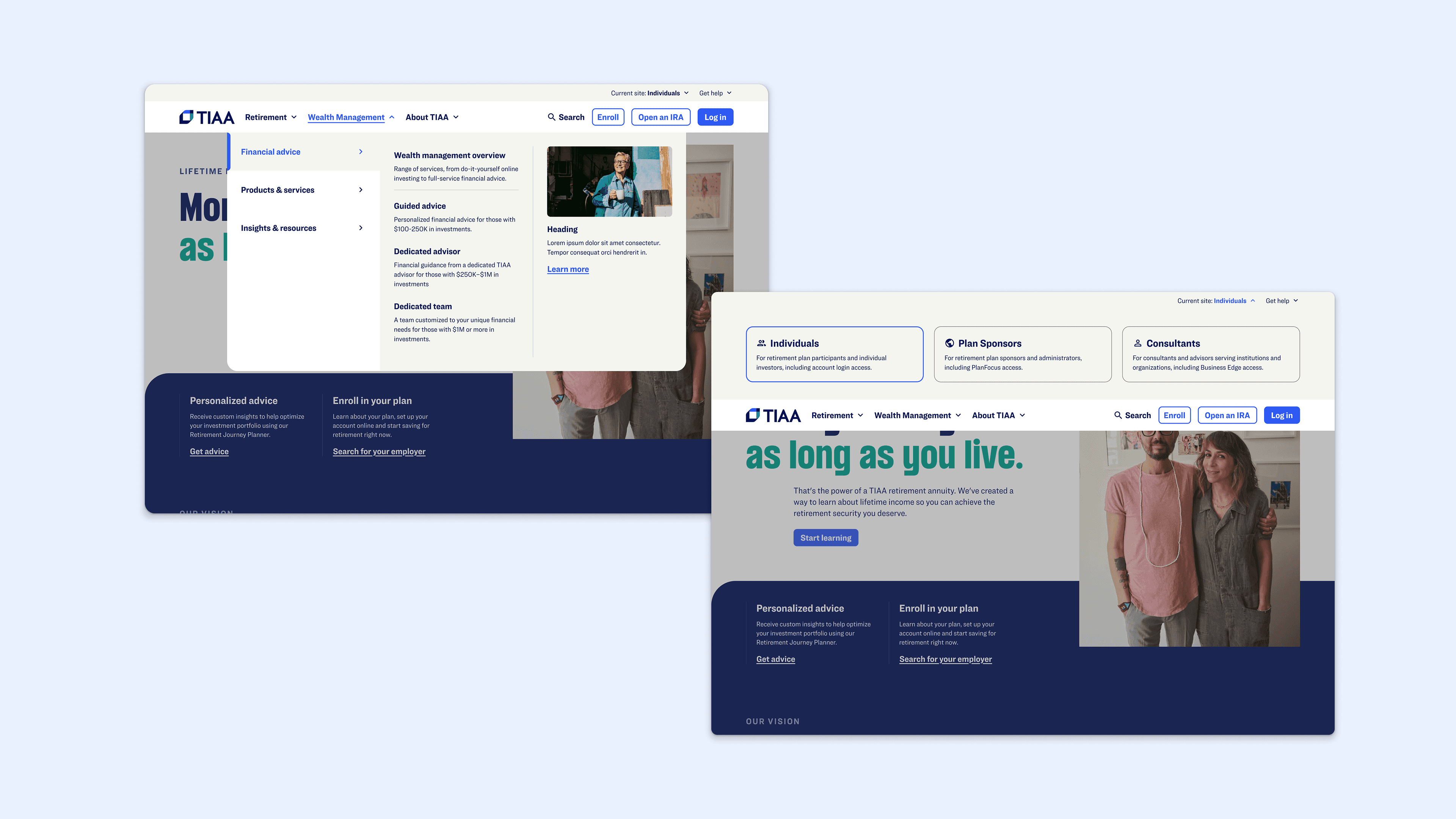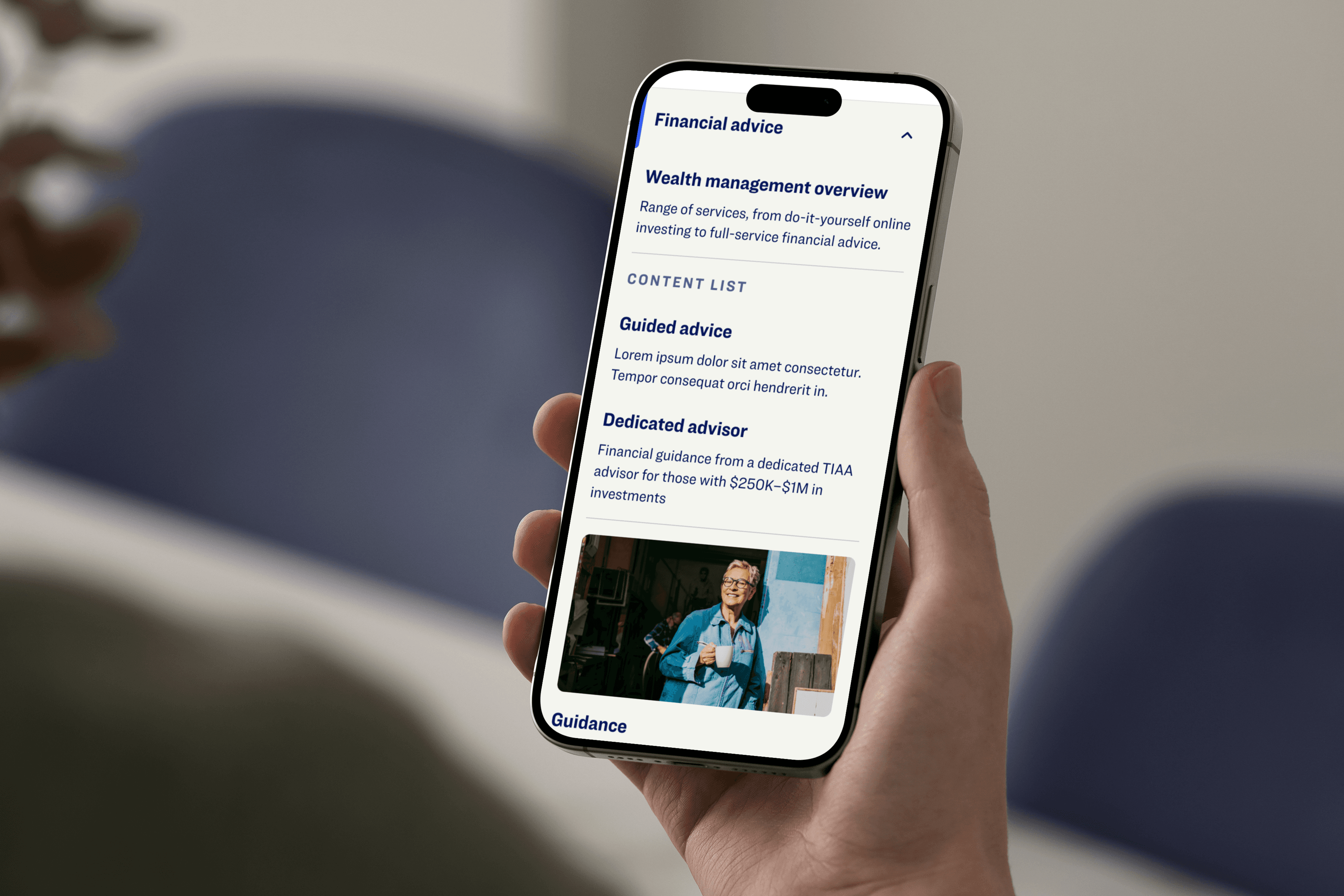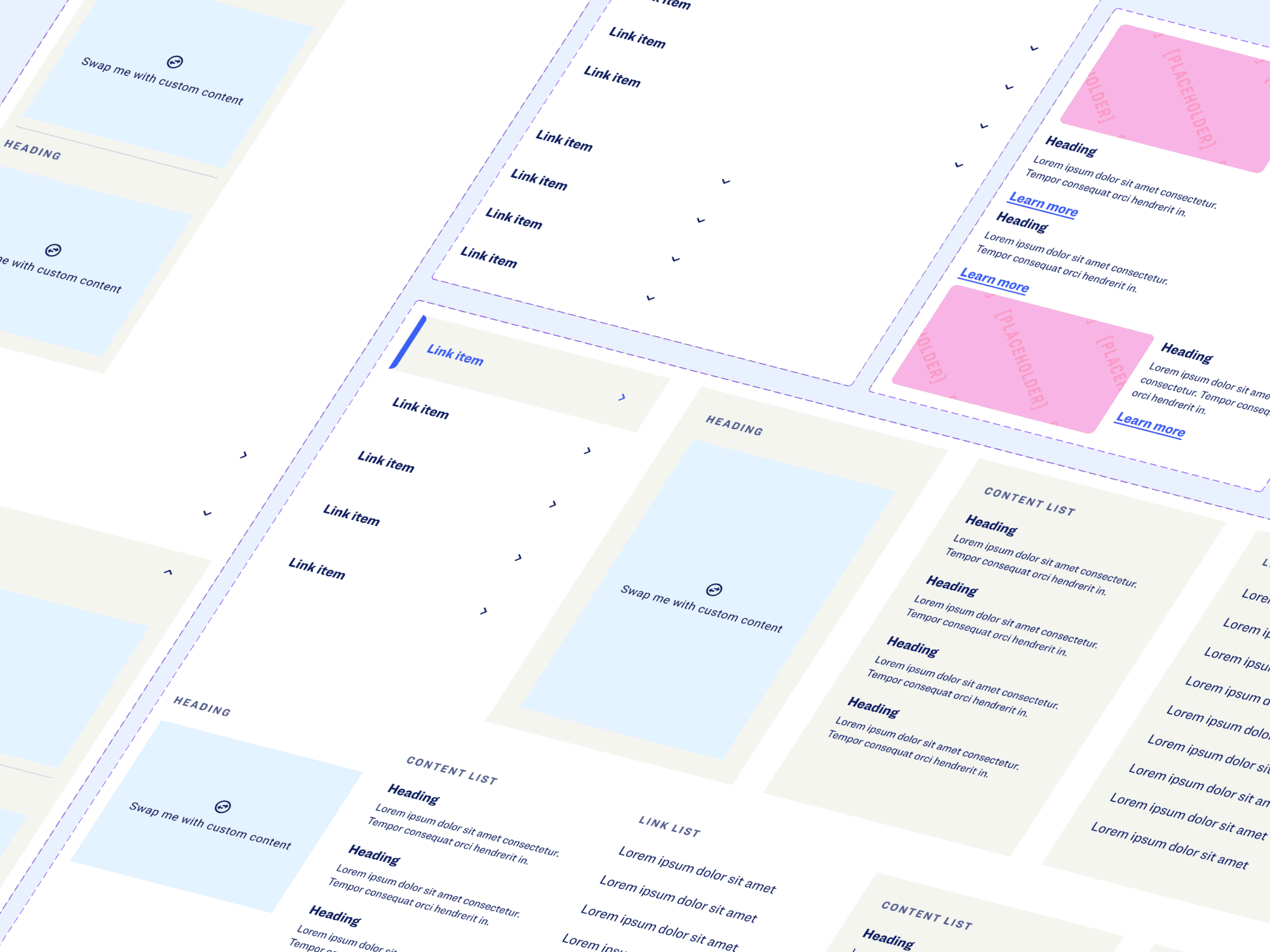
Before I touch a single prop or layer, I map out every realistic use case for the pattern. Those use cases do not come from intuition alone. They come from real inputs: stakeholder goals, business requirements, developer constraints, accessibility standards, and the needs of designers trying to build new experiences inside the system. A component that does not account for all of those inputs will fail somewhere in production, usually in the least convenient moment.
Once the use cases are mapped I work through a deliberate hierarchy. The appearance panel comes first. Brand palette, theme, density, and breakpoint all live here as variable modes within a single structured collection, so one component can serve multiple visual contexts without duplication. Switching a mode updates everything downstream automatically, colors, spacing, type scale, without touching individual layers.
From there I layer in component properties in a specific order. Anything that is simply on or off becomes a boolean. A heading that might not always appear, a CTA that is optional, a bottom spacer that some layouts need and some do not. Booleans keep the component surface clean by hiding complexity that only appears when it is needed. For choices with multiple valid options, like image position, column count, or content alignment, I use dropdown properties so authors are selecting from a defined set of valid configurations rather than entering free values that could break the layout.
For anything structural that needs to swap between distinct content types I use component slots or instance swaps. But I also think carefully about when to surface a nested instance directly in the properties panel. If a child component, like a button, a badge, or an icon, has its own meaningful configuration that an author will realistically need to control, exposing it as a nested instance property lets them configure it in place without digging into layers. When that relationship is not relevant to the author, I keep it hidden.
Where Figma's composite variable type makes sense, for grouped values like shadows or borders that need to behave as a unit, I use those rather than managing individual properties separately.
The goal is always the same: surface every decision an author genuinely needs to make, and hide everything they should never have to touch. A well-built component should make the right choice feel like the only choice.
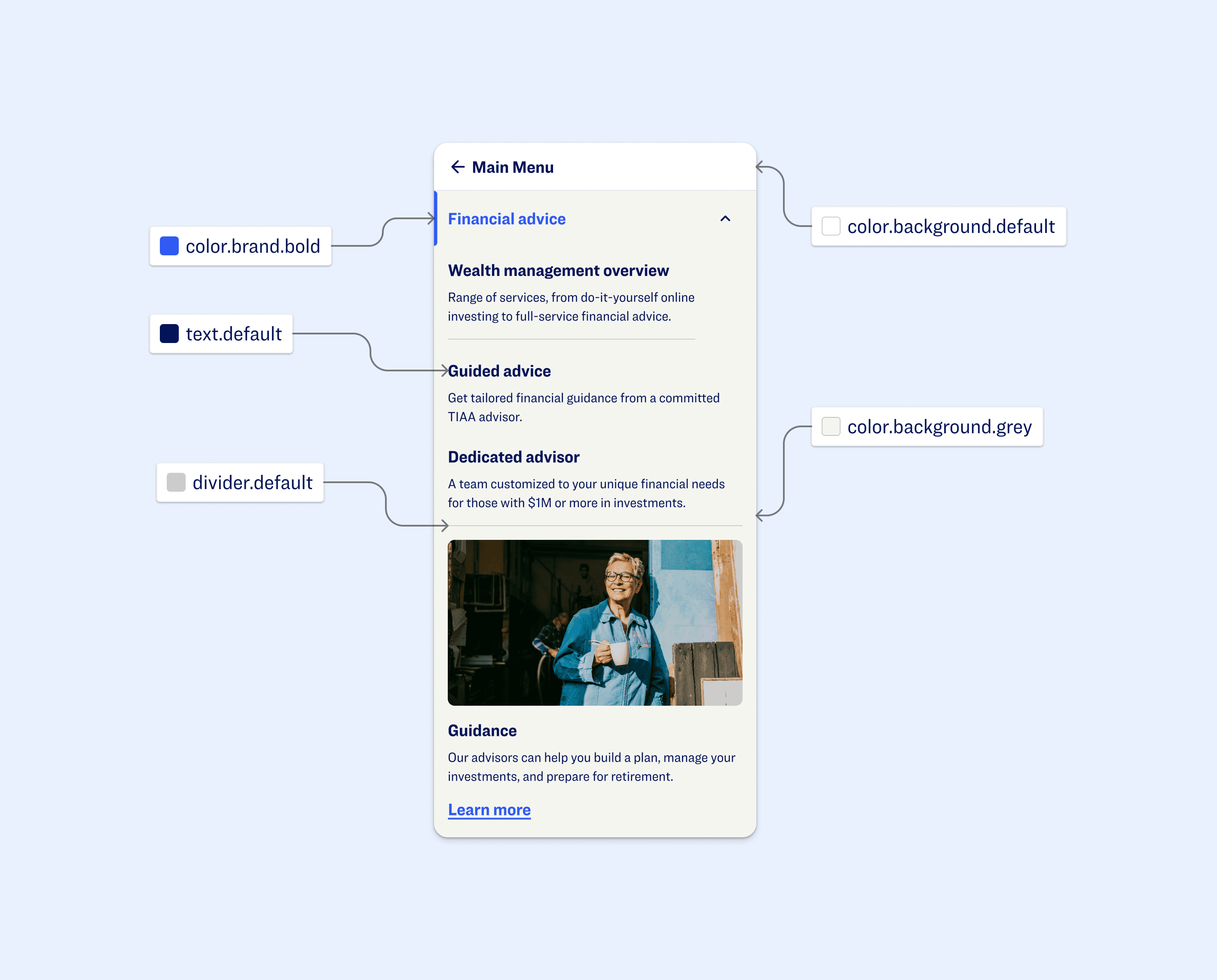
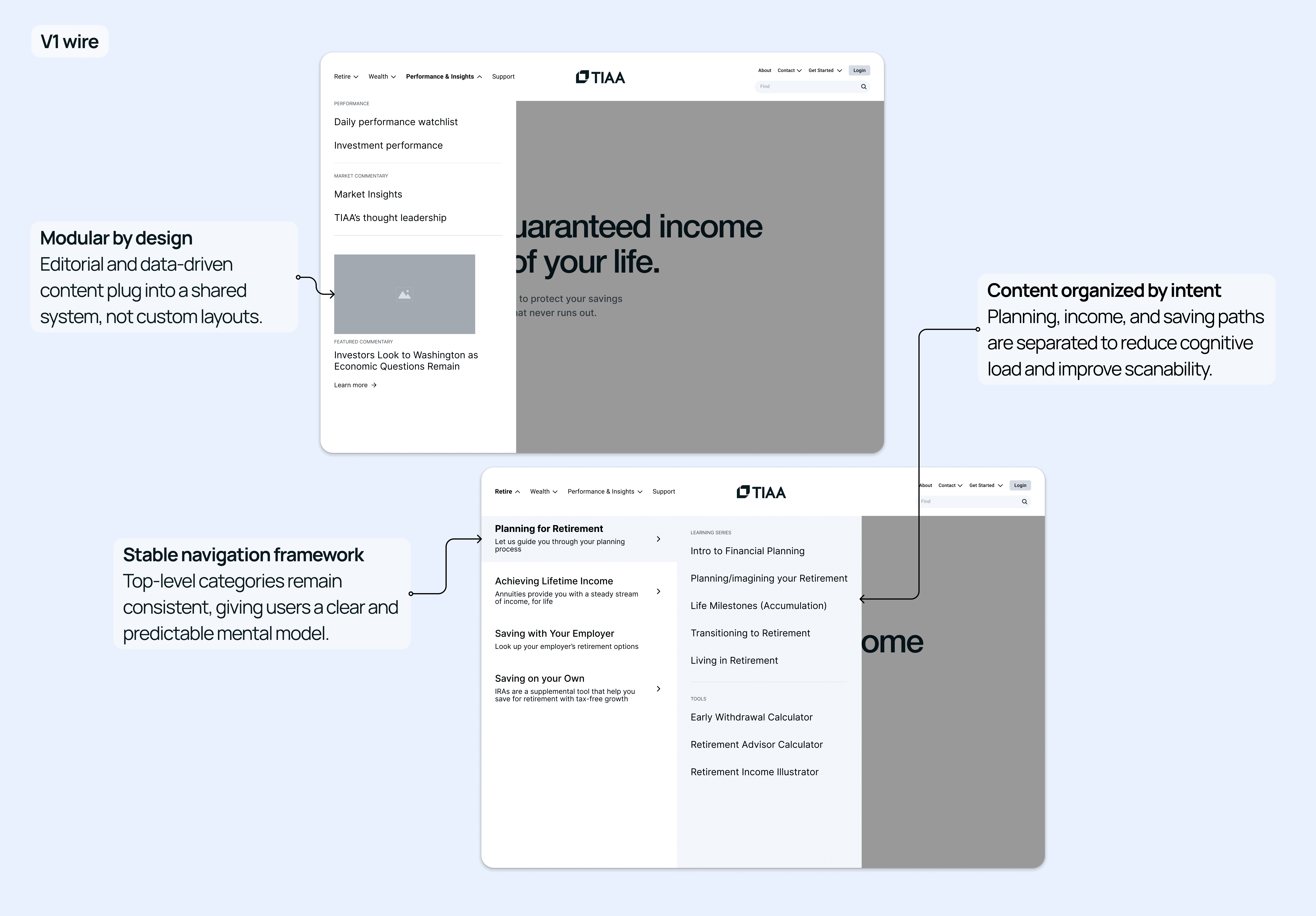

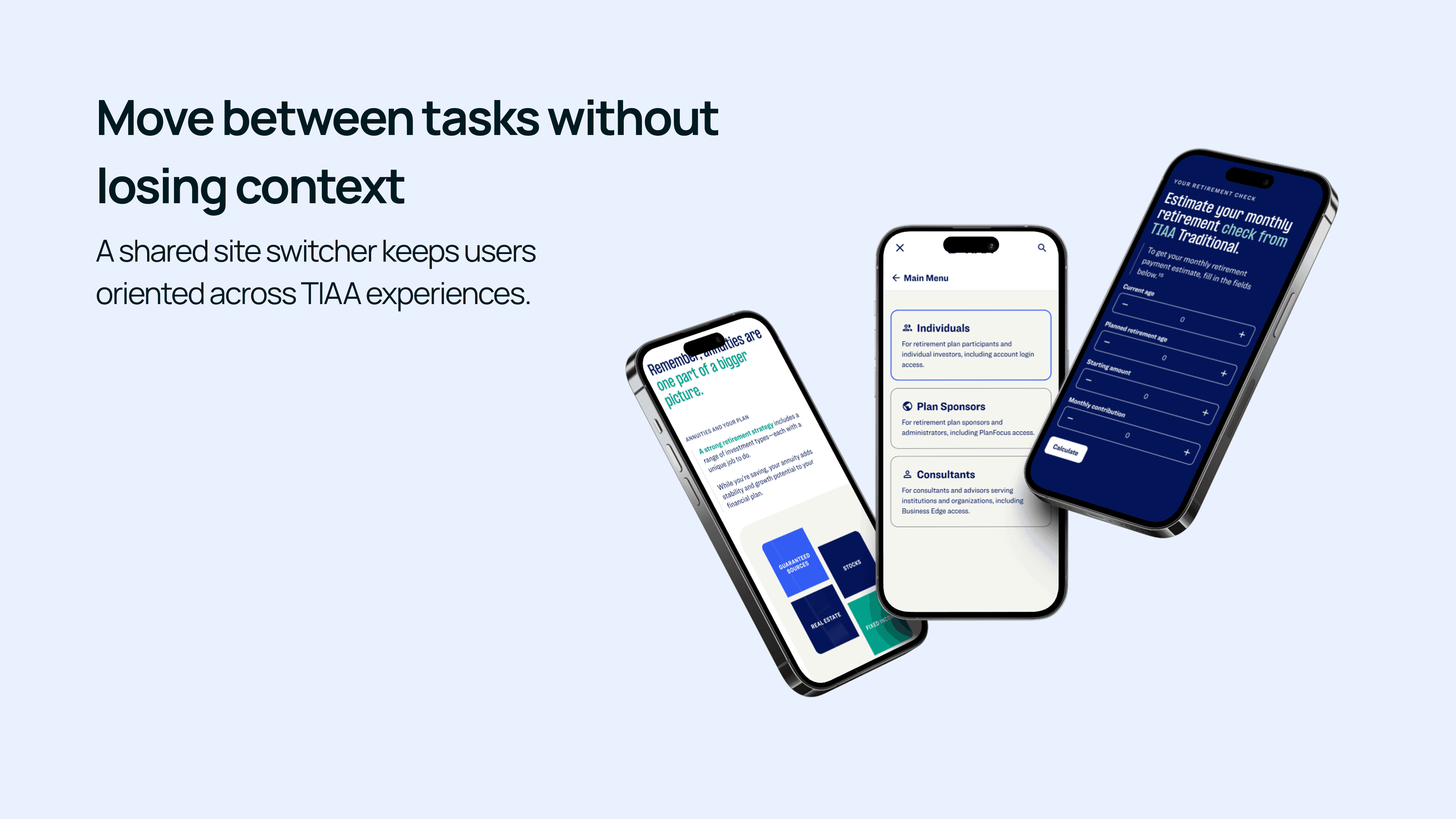
The modular megamenu reduced cognitive load by separating orientation from exploration. Fixed anchors at the top. Flexible content modules beneath. Users were more likely to find what they needed without backtracking or giving up entirely.
The 41% reduction in bounce rate came from clearer content discovery. People found things. They stayed. Standardized navigation also made the site's content relationships legible to search engines in a way the bespoke solutions never could, contributing to a 76% improvement in SEO performance.
Better navigation, it turns out, is also better infrastructure. Who knew.
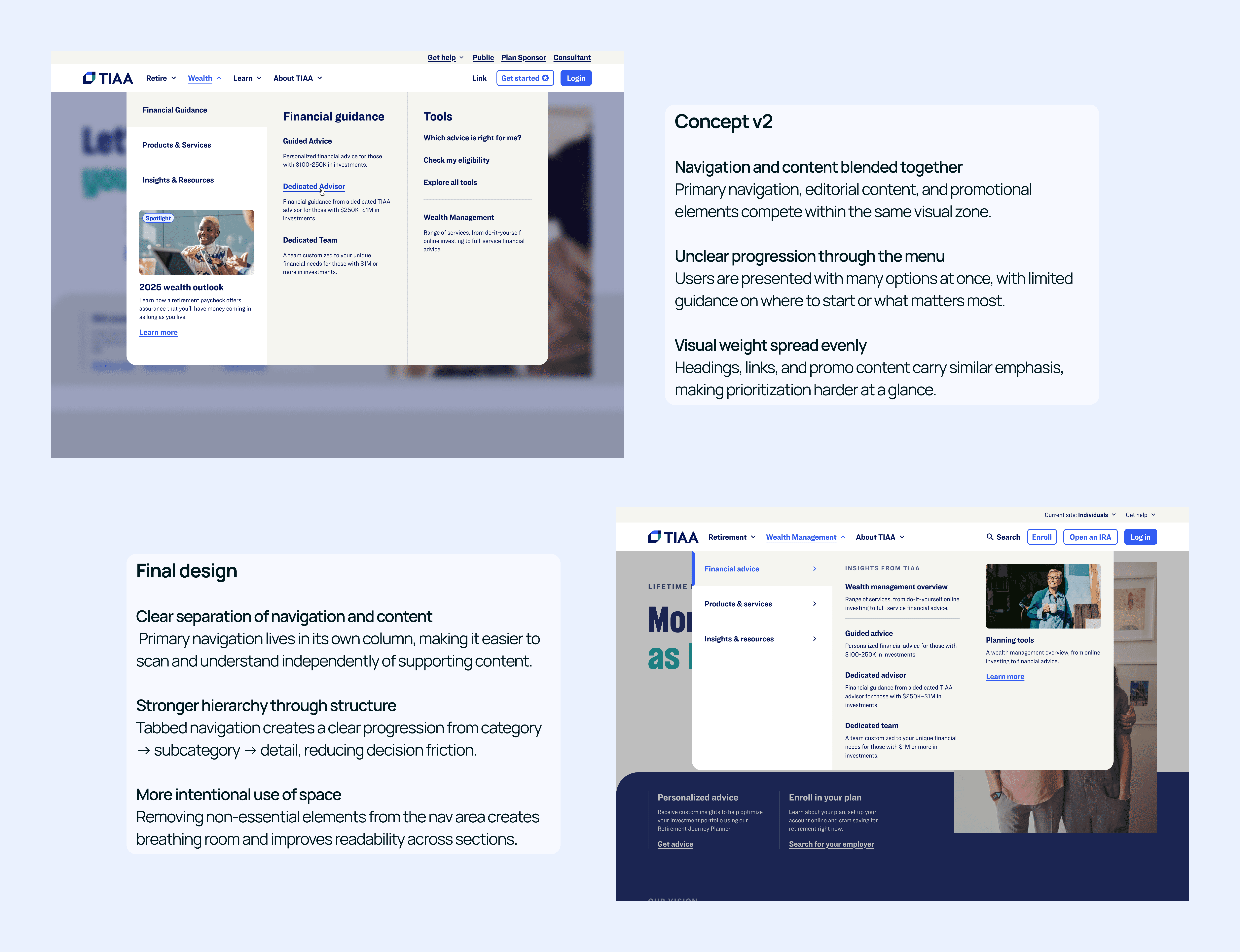
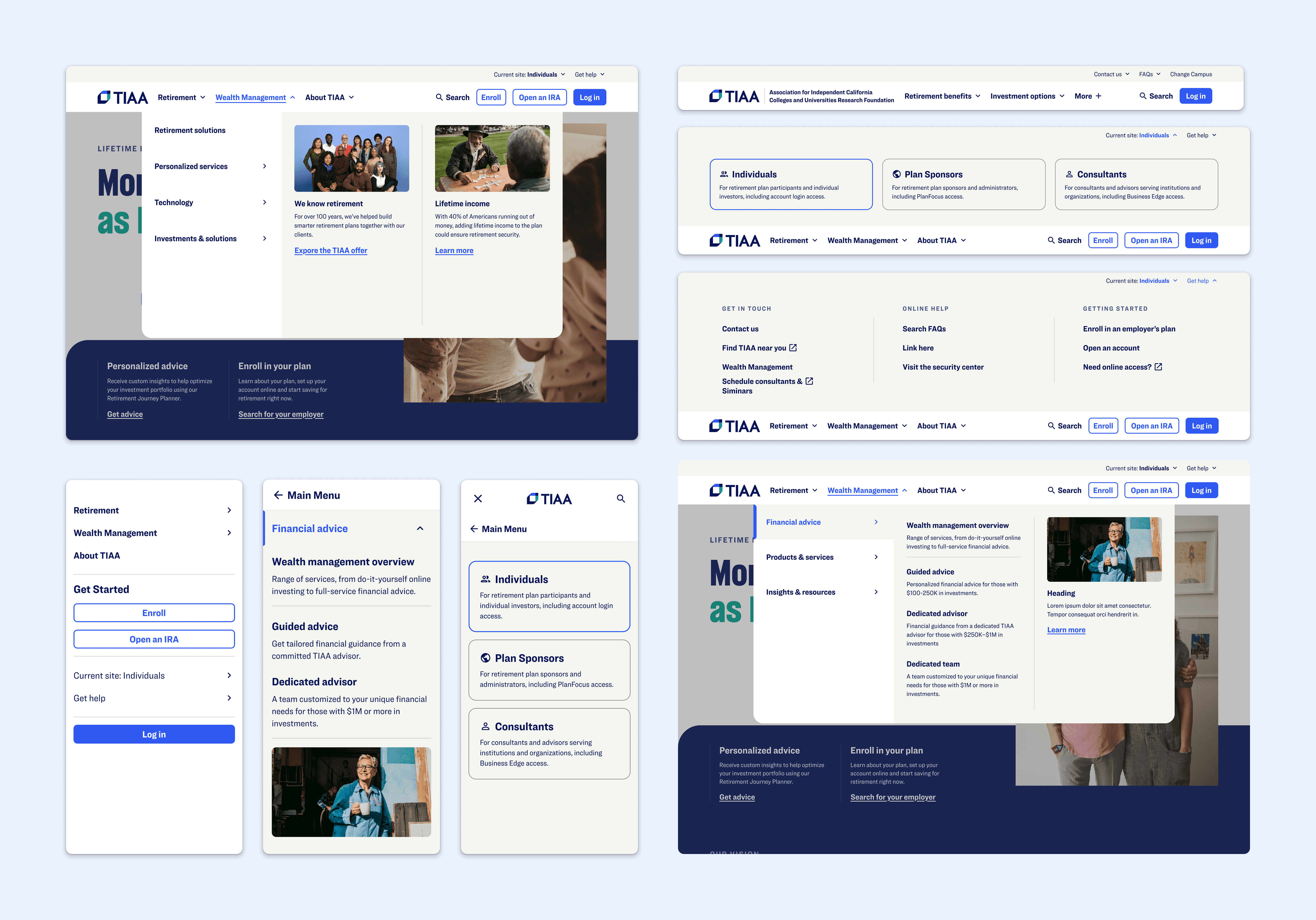
Once the megamenu existed as a governed pattern, something shifted. New content hubs, calculators, and long-form experiences could launch without rethinking navigation every single time. Information architecture could evolve without disrupting users who had already learned where things were.
Teams shipped new pages and sections using pre-approved modules instead of custom navigation builds. Design overhead dropped. Development overhead dropped. Accessibility and brand consistency held.
A pattern that teams trusted became infrastructure they built on top of. That is a different kind of thing entirely.
“Jeremy is a highly talented designer and creative thinker. He’s a true expert in the technical intricacies of Figma and has a deep understanding of how to build scalable, efficient design systems. His ability to ask the right questions ensures that every project is approached with clarity and purpose. Jeremy consistently brings a strategic mindset to the table, always thinking several steps ahead.”

Eric Shoemaker
Art Director at TIAA
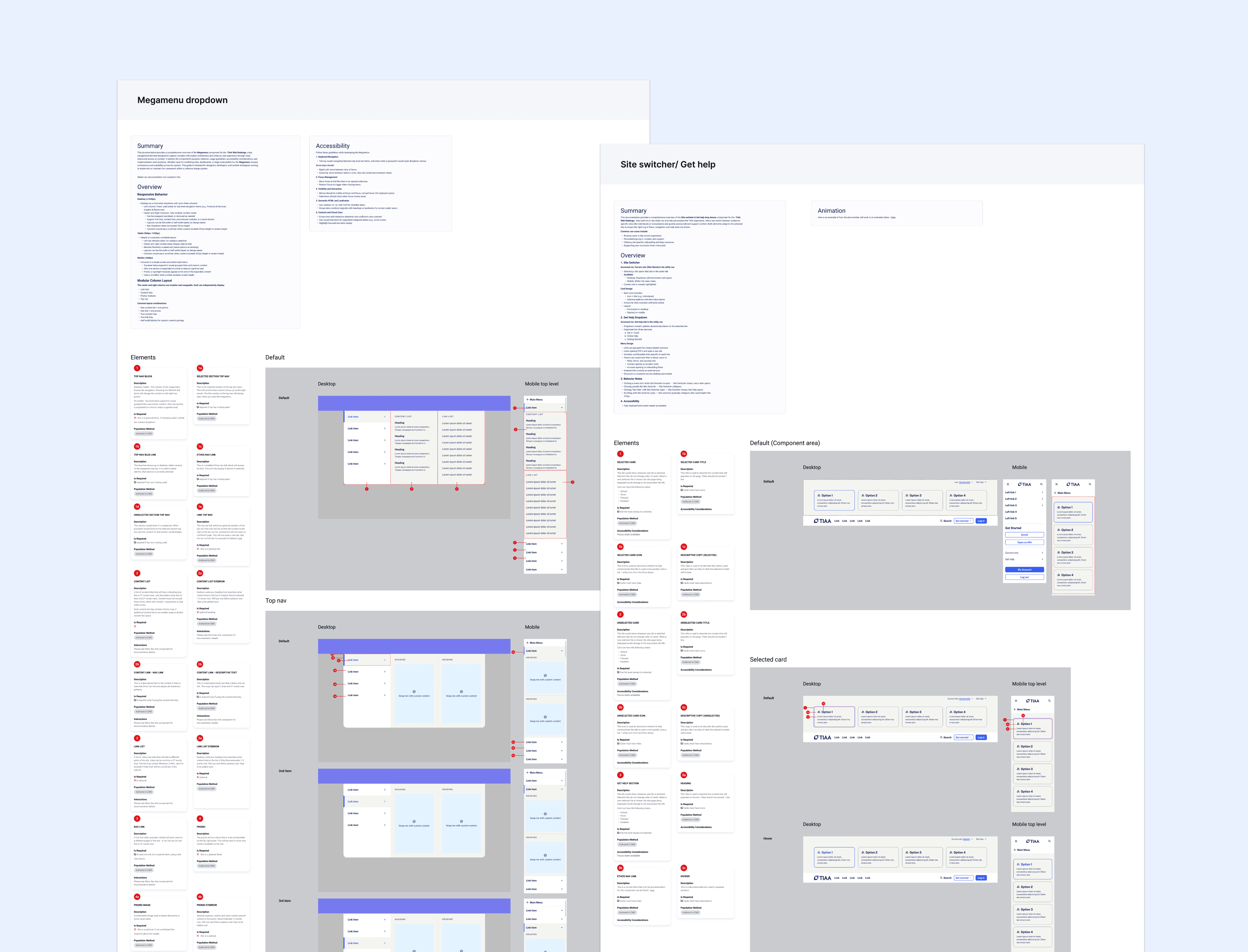
Before the redesign, navigation decisions were opinion-driven. Everybody had a take. Meetings were long. Outcomes were inconsistent.
After: shared rules. Design, engineering, and content all working from the same navigation language. Decisions got faster because the system made the right answer obvious. Governance got clearer because there was something to govern against. Execution got more consistent because teams were not reinventing the wheel every sprint.
The real win was not better navigation. It was that people stopped arguing about navigation. That freed up a surprising amount of energy for everything else.
Outcomes