TIAA
System redesign
Carrying a century-old brand into the future
Overview
My role
System design lead
Team
2 Senior product designers, Creative director
Duration
9 months, 2023-2024
Goals
The goal of this work was to translate the new TIAA brand into a scalable Marketing Design System that could support enterprise execution while maintaining clarity, accessibility, and speed in complex financial experiences.
Create alignment
Align teams around a shared system of patterns, templates, and rules so experiences are built from common structure, not individual interpretation.
Scale with structure
Replace one-off page design with reusable, well-defined patterns that could power hundreds of marketing pages without increasing inconsistency or design debt.
Make quality repeatable
Ensure accessibility, hierarchy, and brand integrity are built into the system itself through clear standards, documentation, and governance, so quality holds up as volume and velocity increase.
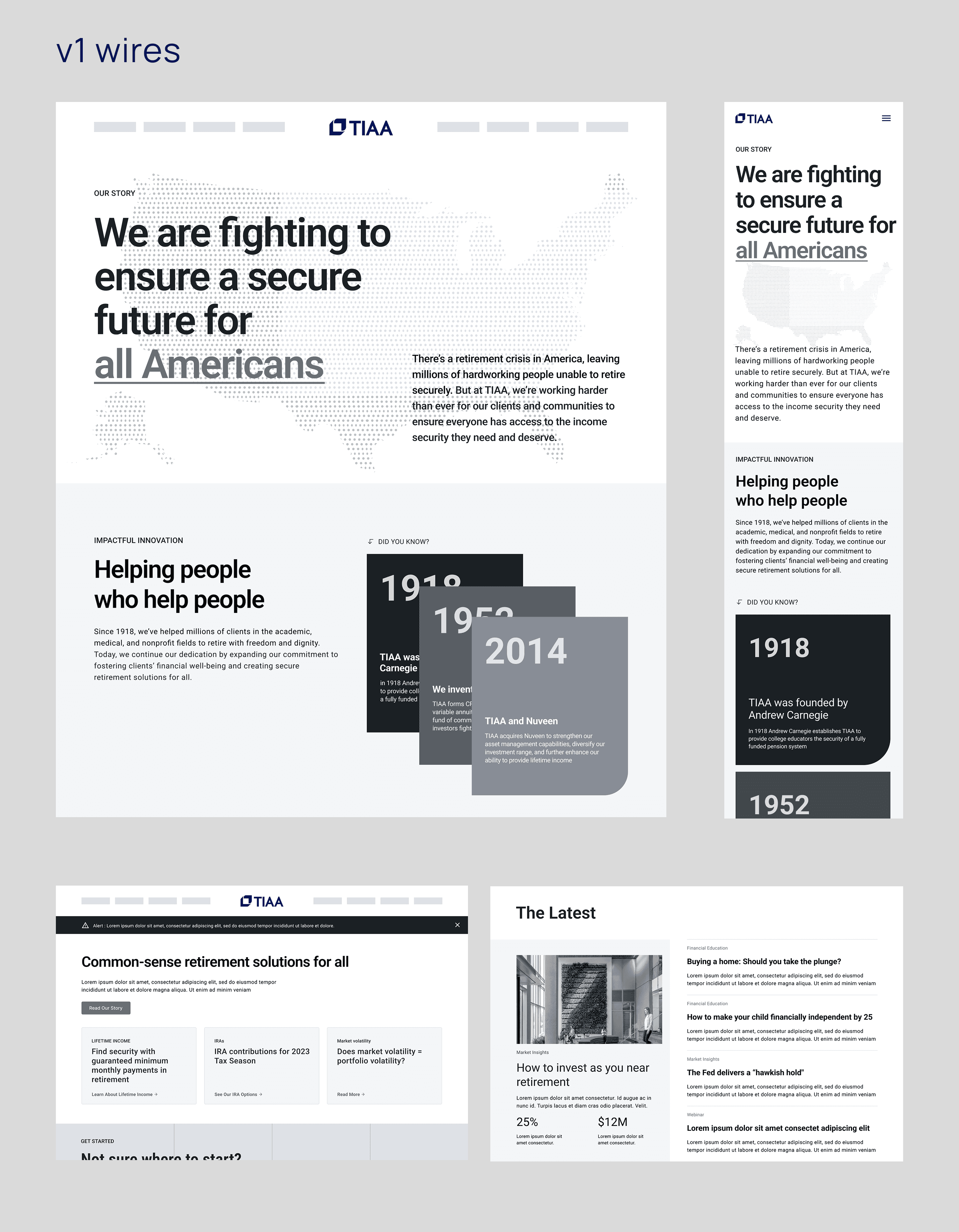
Original design
Initial findings
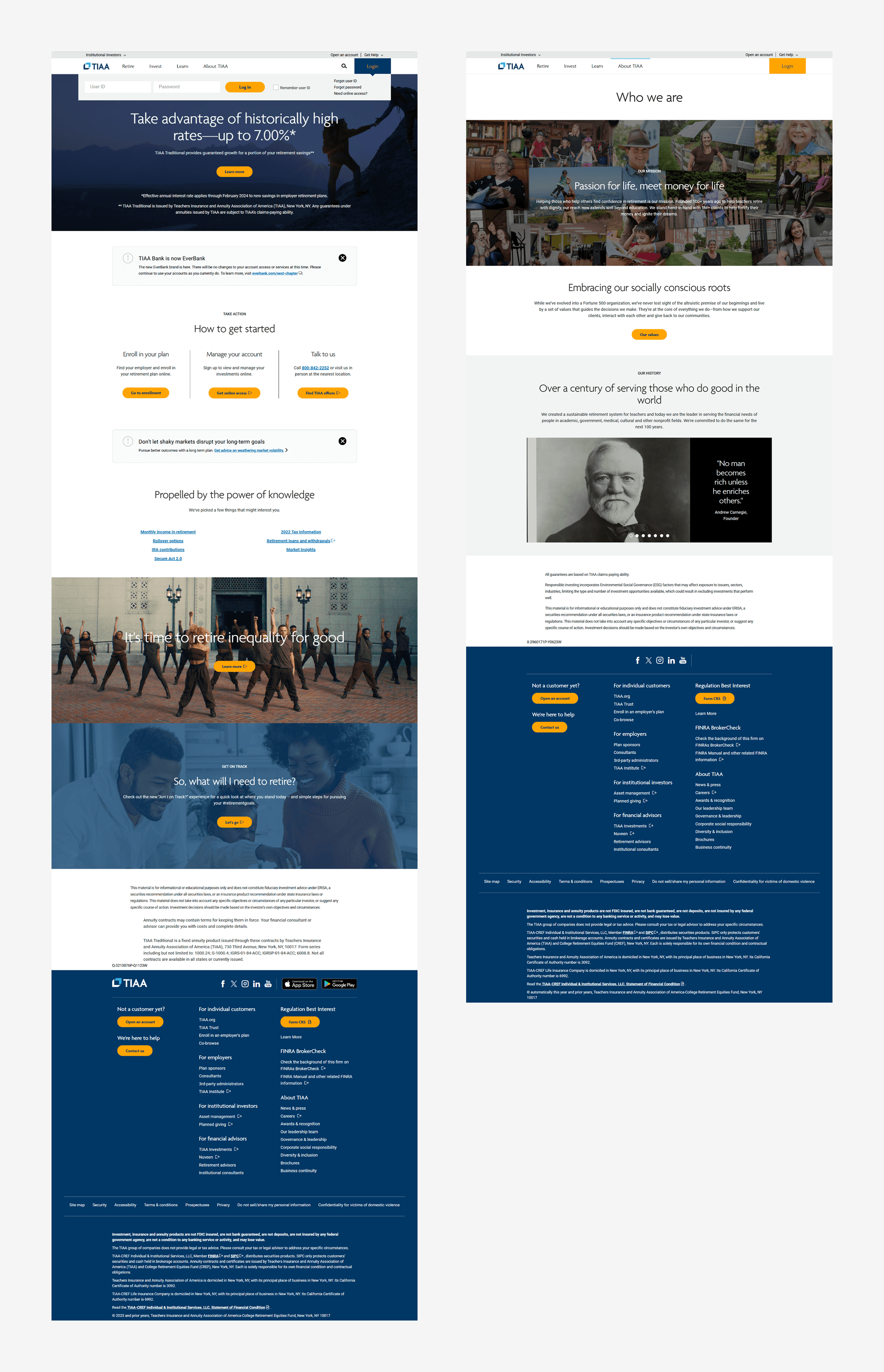
Early system foundations were forming, but several scale risks surfaced quickly:
The system was defined in principle, not in execution
Teams aligned on the need for a system, but patterns, rules, and ownership were still ambiguous.Early patterns did not account for scale
Solutions worked for a small set of pages, but broke down when applied across hundreds of marketing experiences.Design and CMS workflows were misaligned
What designers created and what contributors could safely author in AEM were not yet the same thing.Reuse depended on coordination, not structure
Consistency required meetings and tribal knowledge instead of clear, reusable system rules.Governance was emerging, not embedded
Decision-making lived in conversations rather than in documented, enforceable standards.

One system, shared understanding
75% faster page design
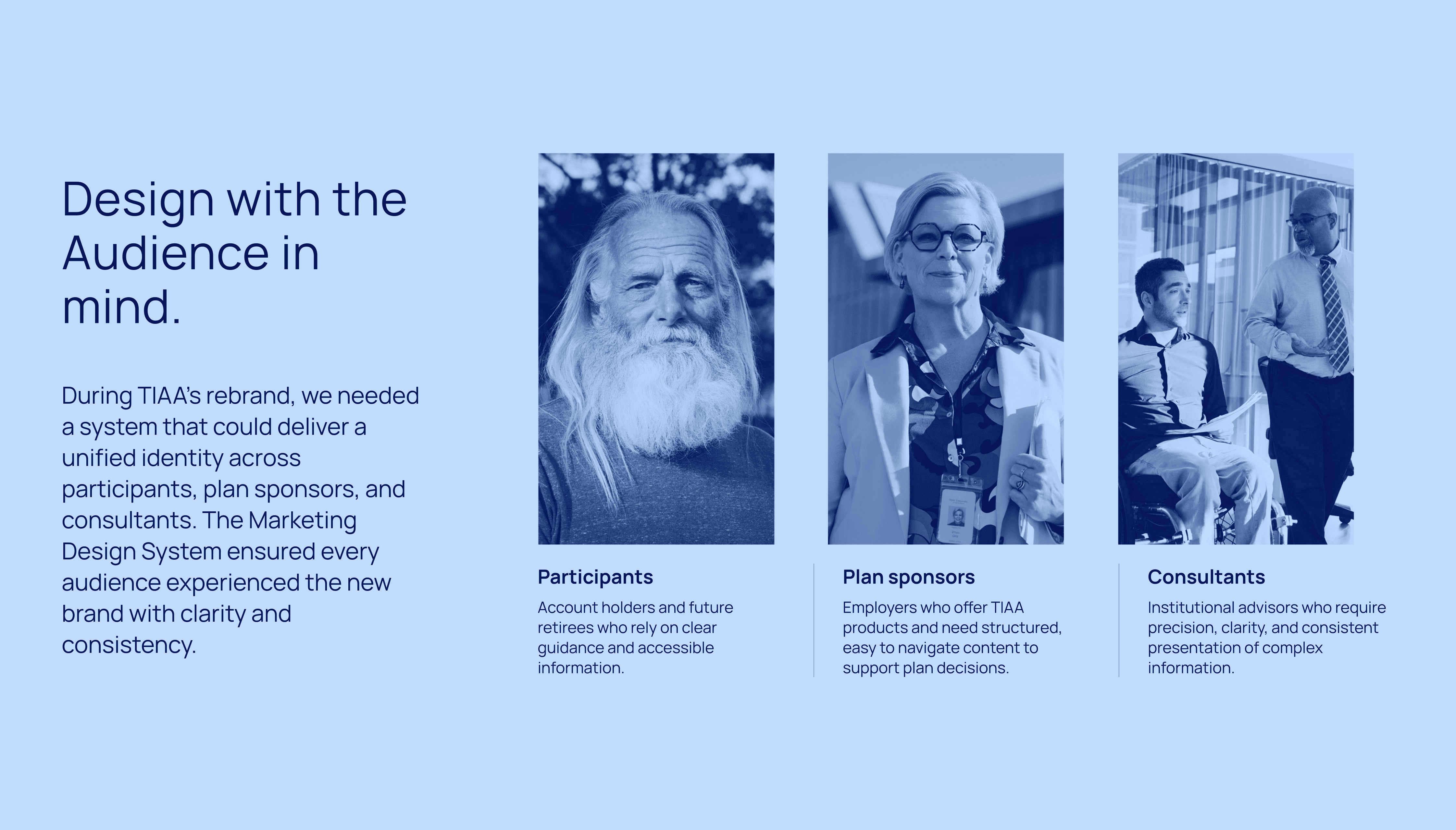
The system needed to work for more than designers. It had to support marketing teams, contributors, and engineers building for participants, plan sponsors, and consultants across TIAA.org without reinterpreting the brand every time.
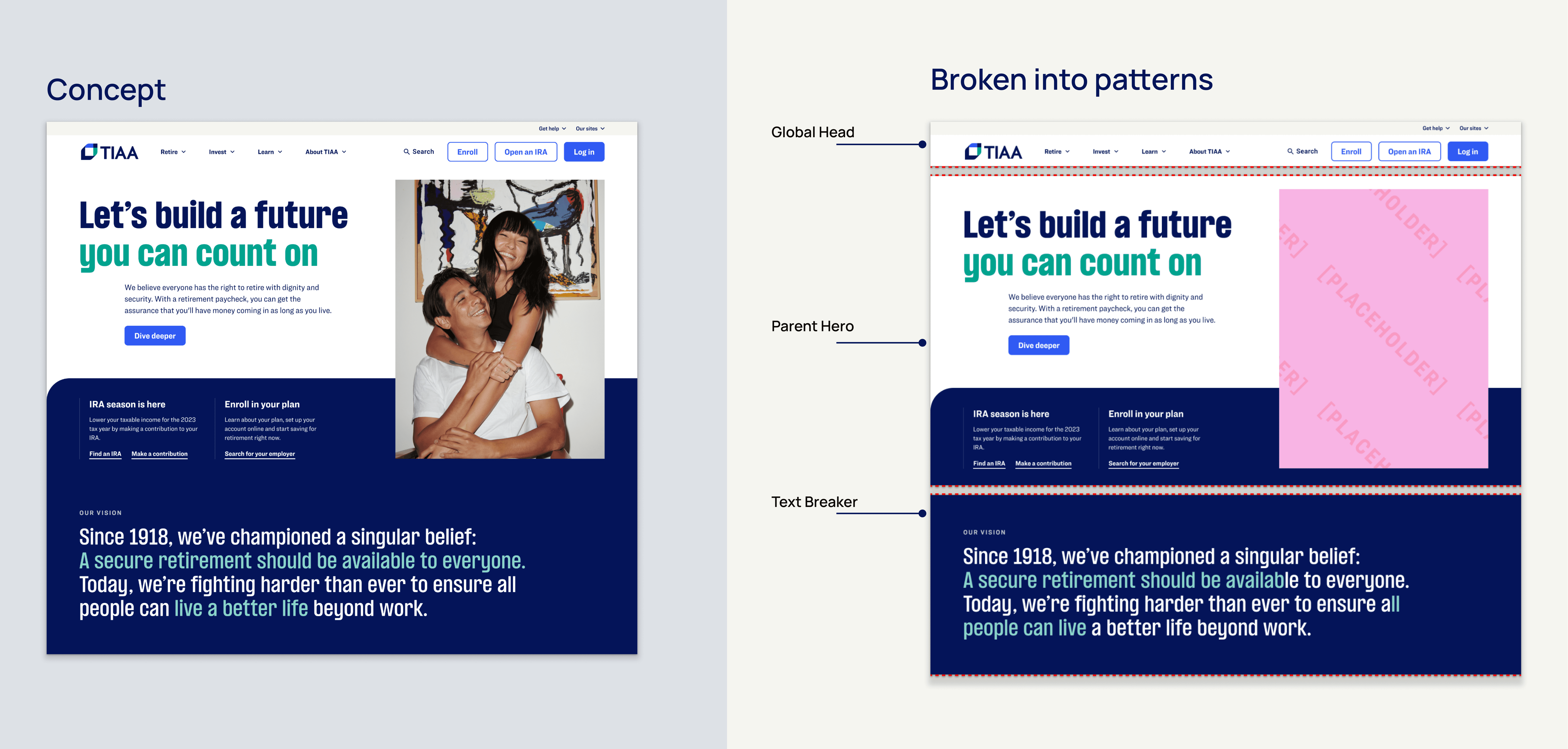
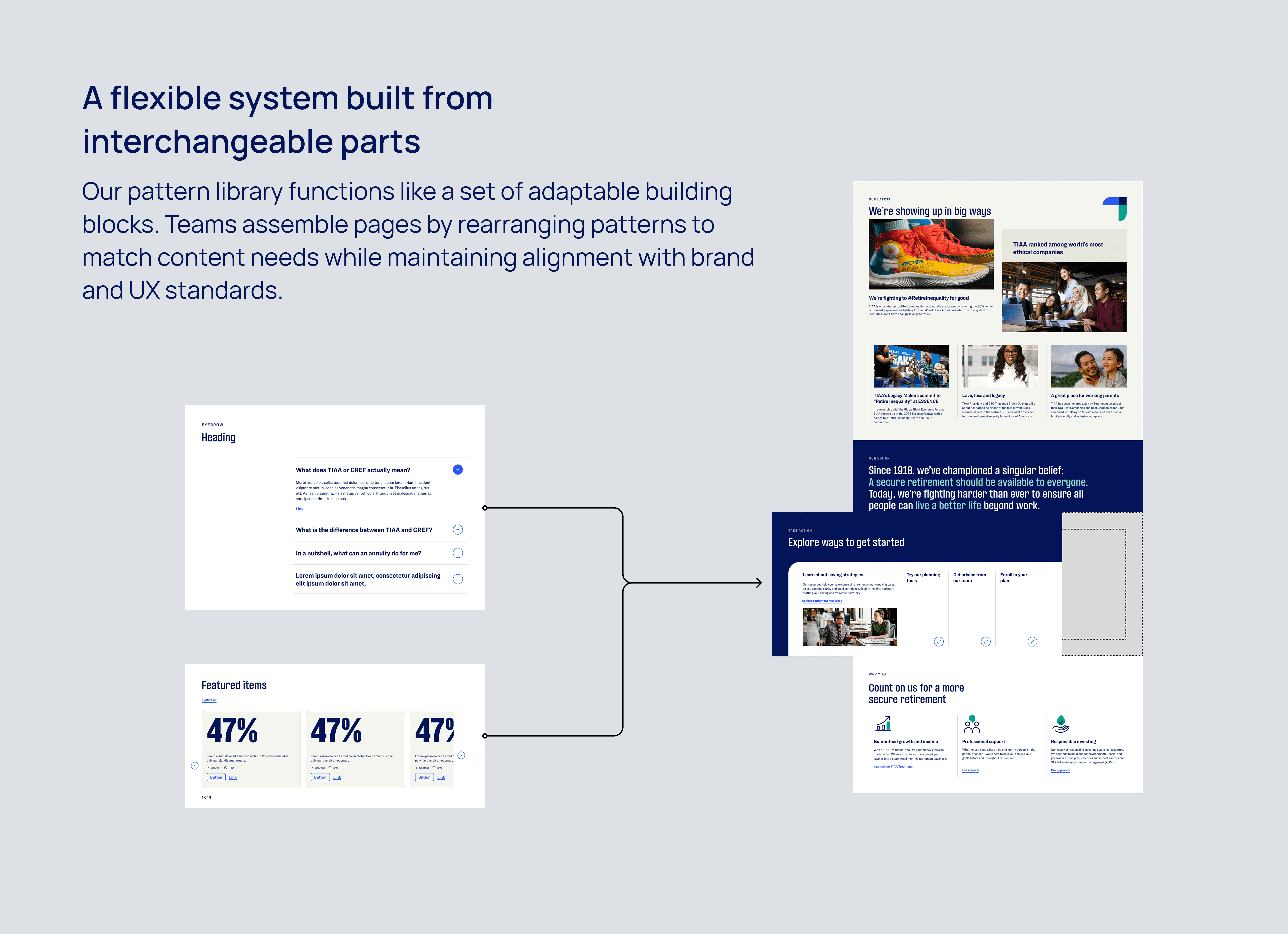
By aligning teams around shared page and content patterns, we replaced subjective interpretation with clear structure and rules. Patterns were built once and reused everywhere.
500+ pages built from shared patterns
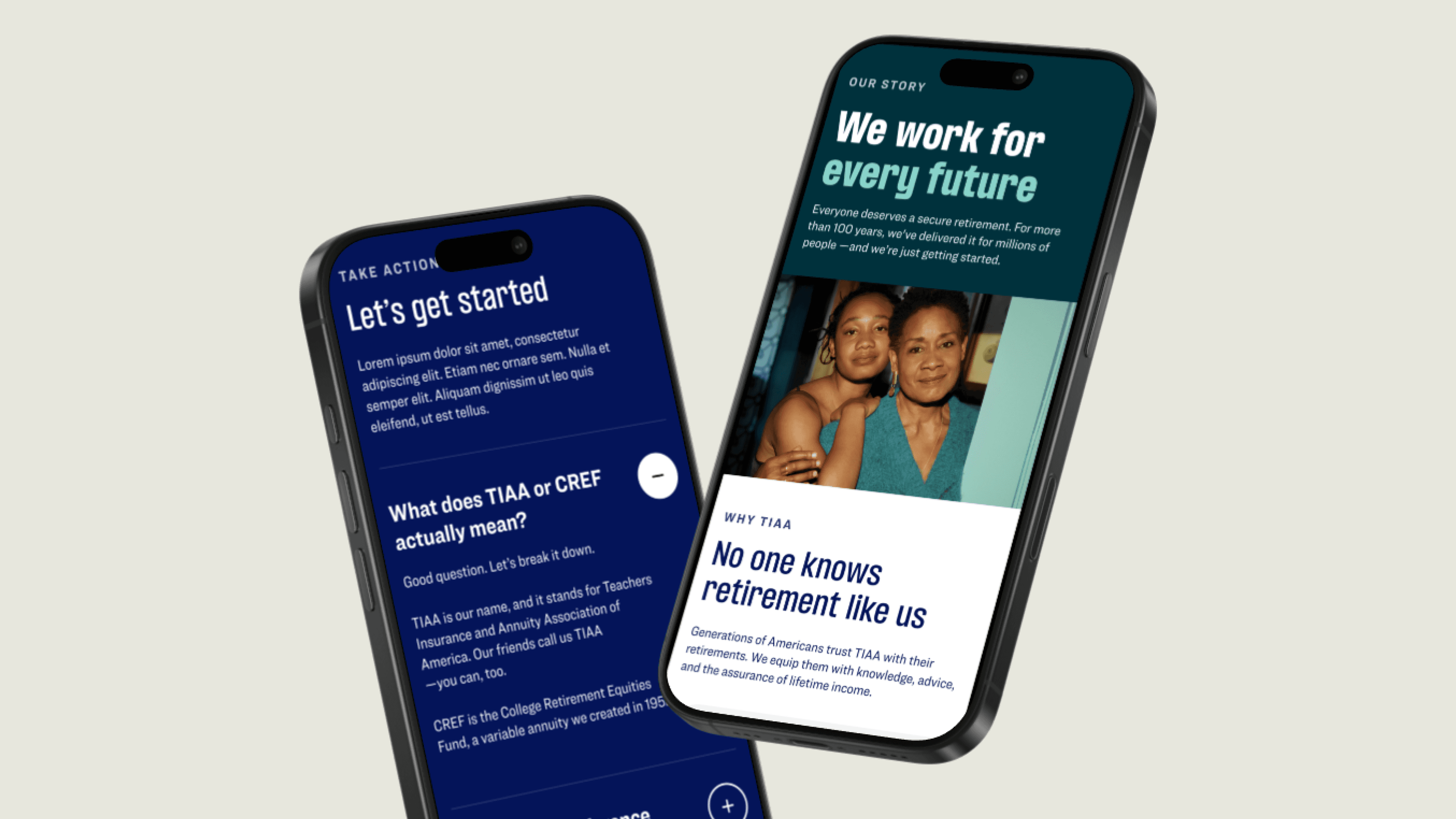
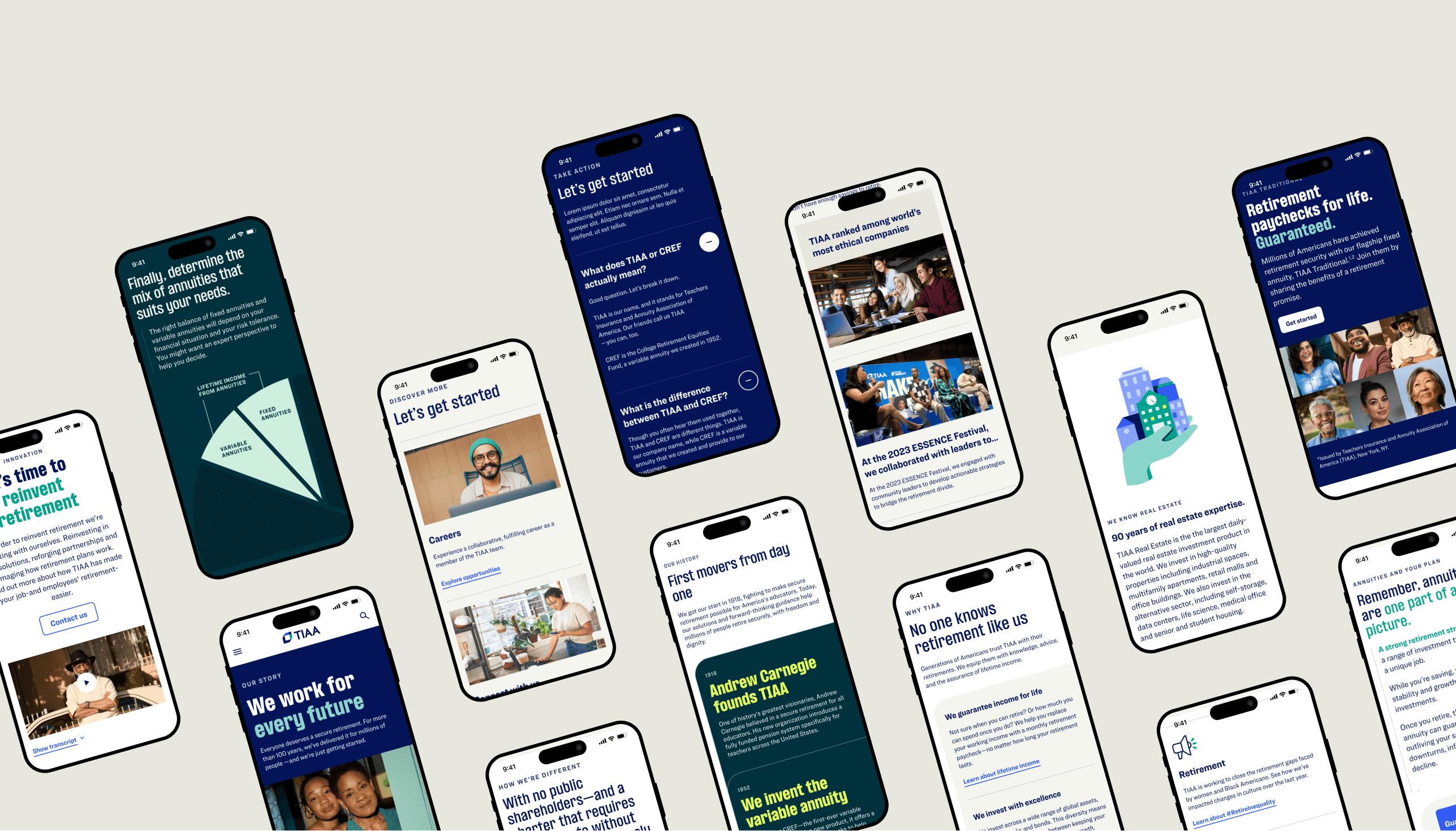
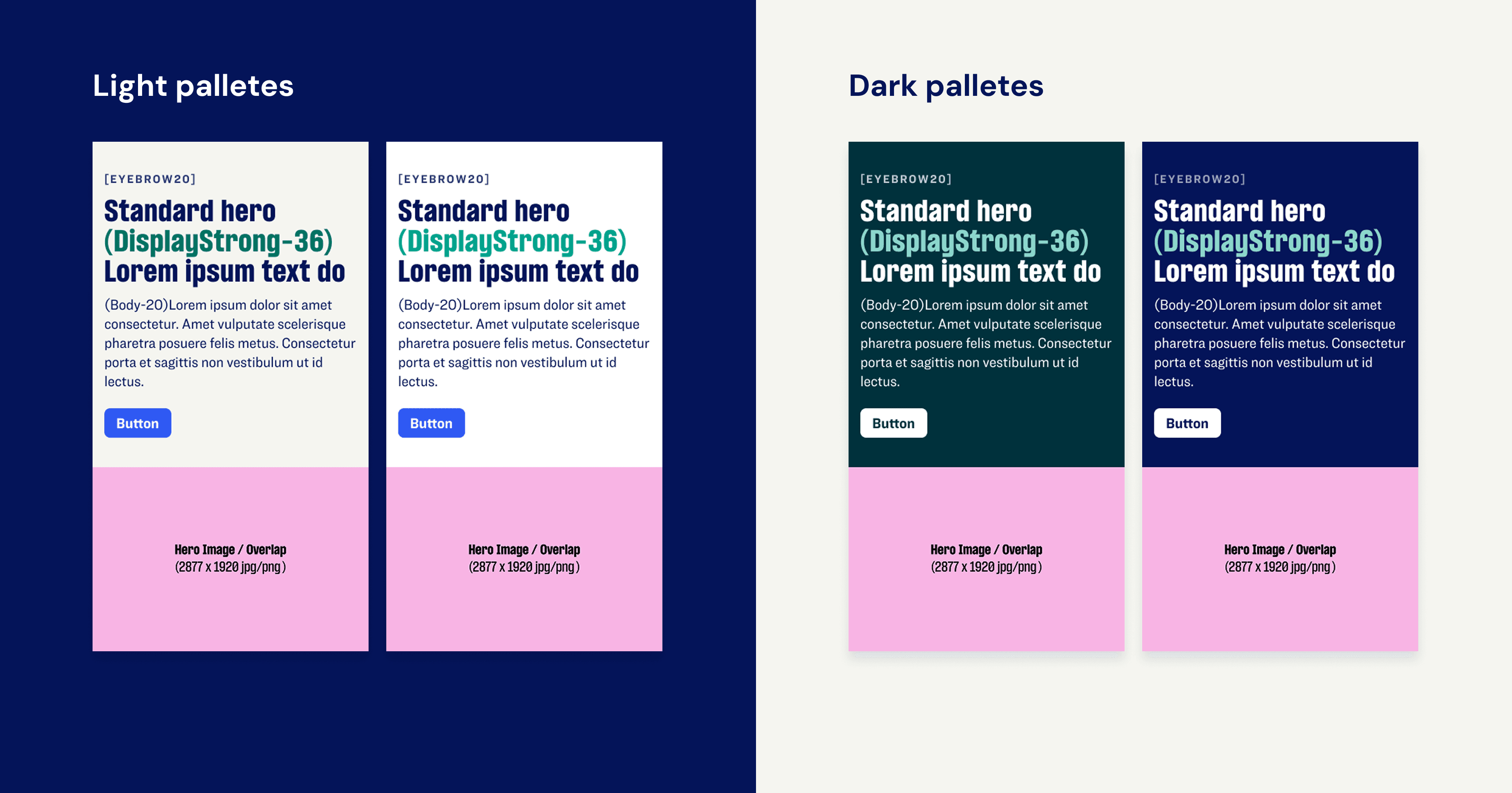
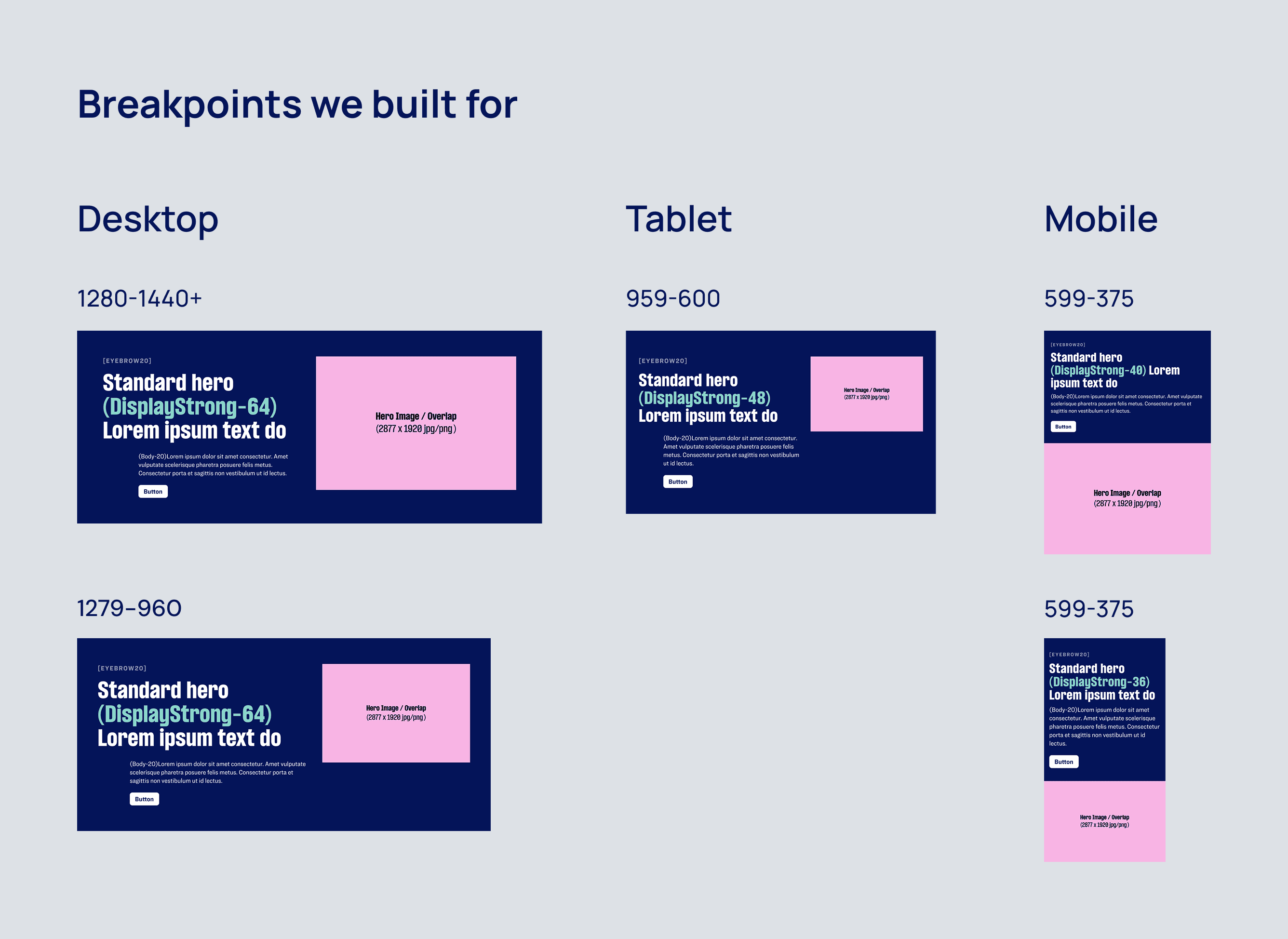
We aligned around a small set of core page and content patterns that worked across distinct audiences with very different needs. Every pattern was designed across all key breakpoints and supported four brand palettes, ensuring reuse without redesign.
Clear layout rules, defined content zones, and AEM-ready patterns allowed the rebrand to scale across 500+ pages without fragmentation.
One system replaced subjective interpretation
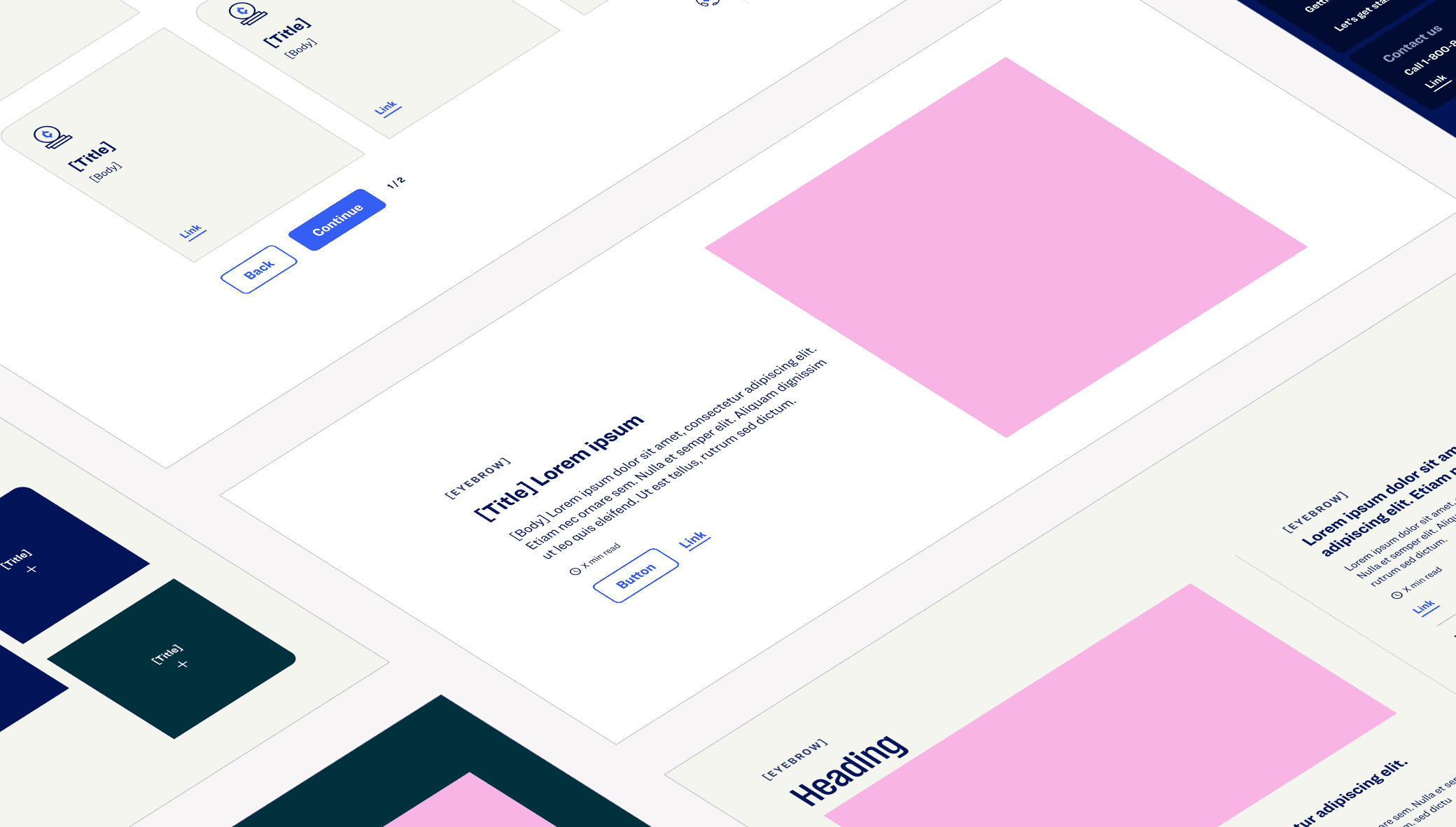
When I joined, the rebrand was still directional and work was moving fast across multiple teams and agencies. I organized agency handoffs and early page concepts into a single pattern library to create a shared source of truth.
With no atomic foundation in place yet, patterns were defined from scratch and documented clearly, giving teams a system they could rely on instead of individual judgment.


Enable scale
30% faster handoff to development
As page volume increased, the bottleneck shifted from design to delivery. Introducing templates allowed teams to move from custom page builds to predictable, system-backed handoffs. Pages no longer needed bespoke design interpretation before reaching engineering.
Templates standardized structure, behavior, and constraints upfront, reducing back-and-forth and allowing engineering to implement with confidence.
Template-based production
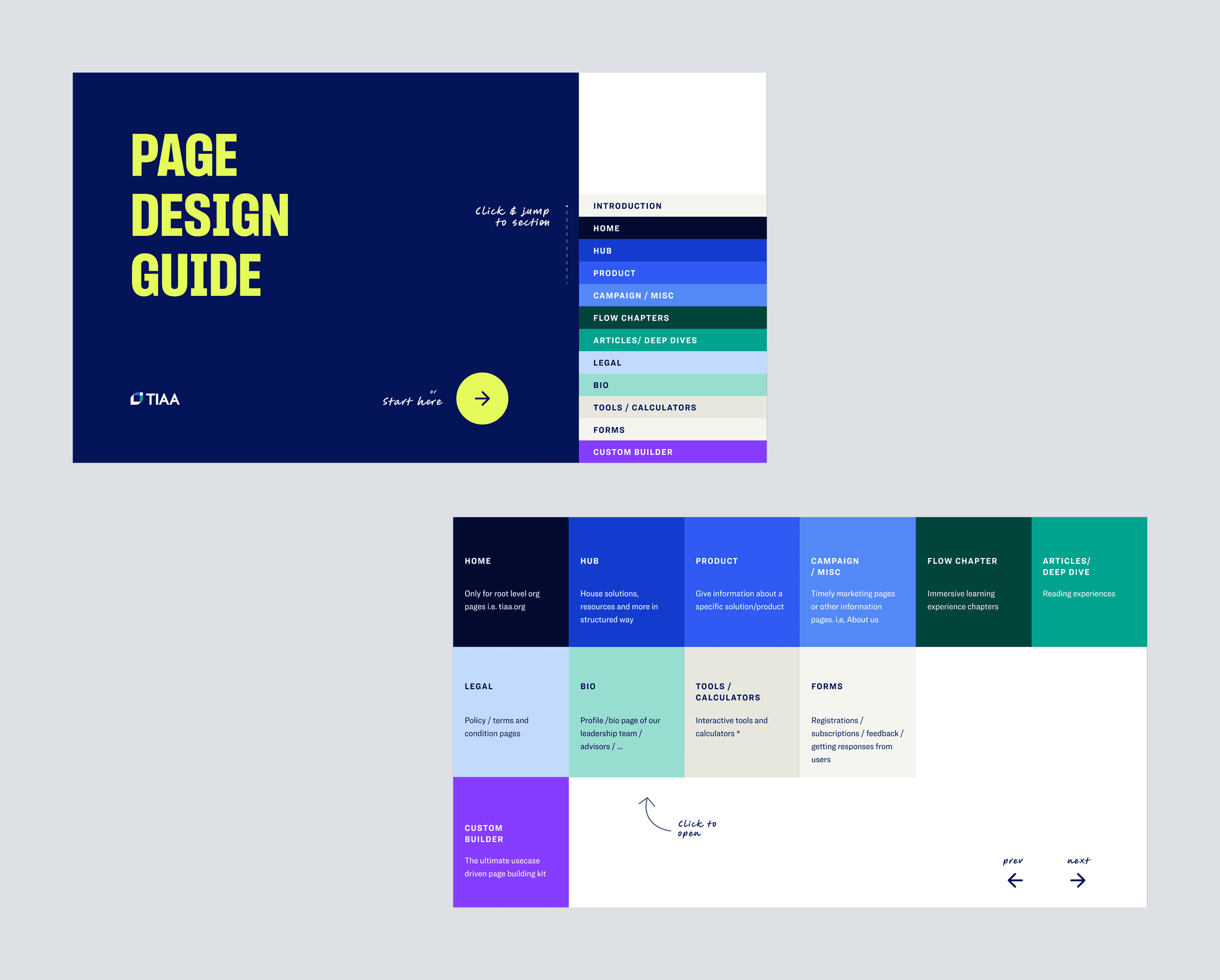
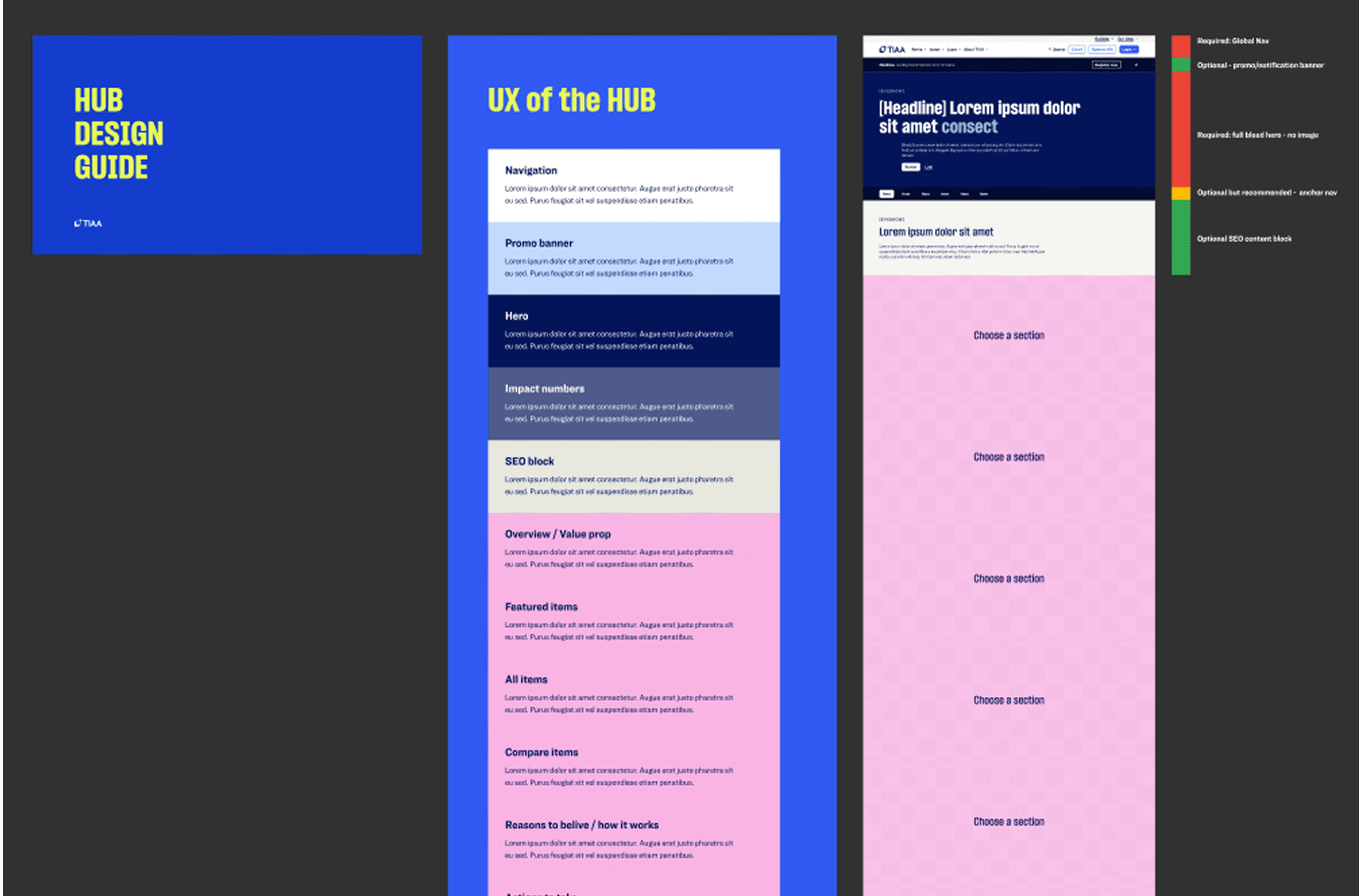
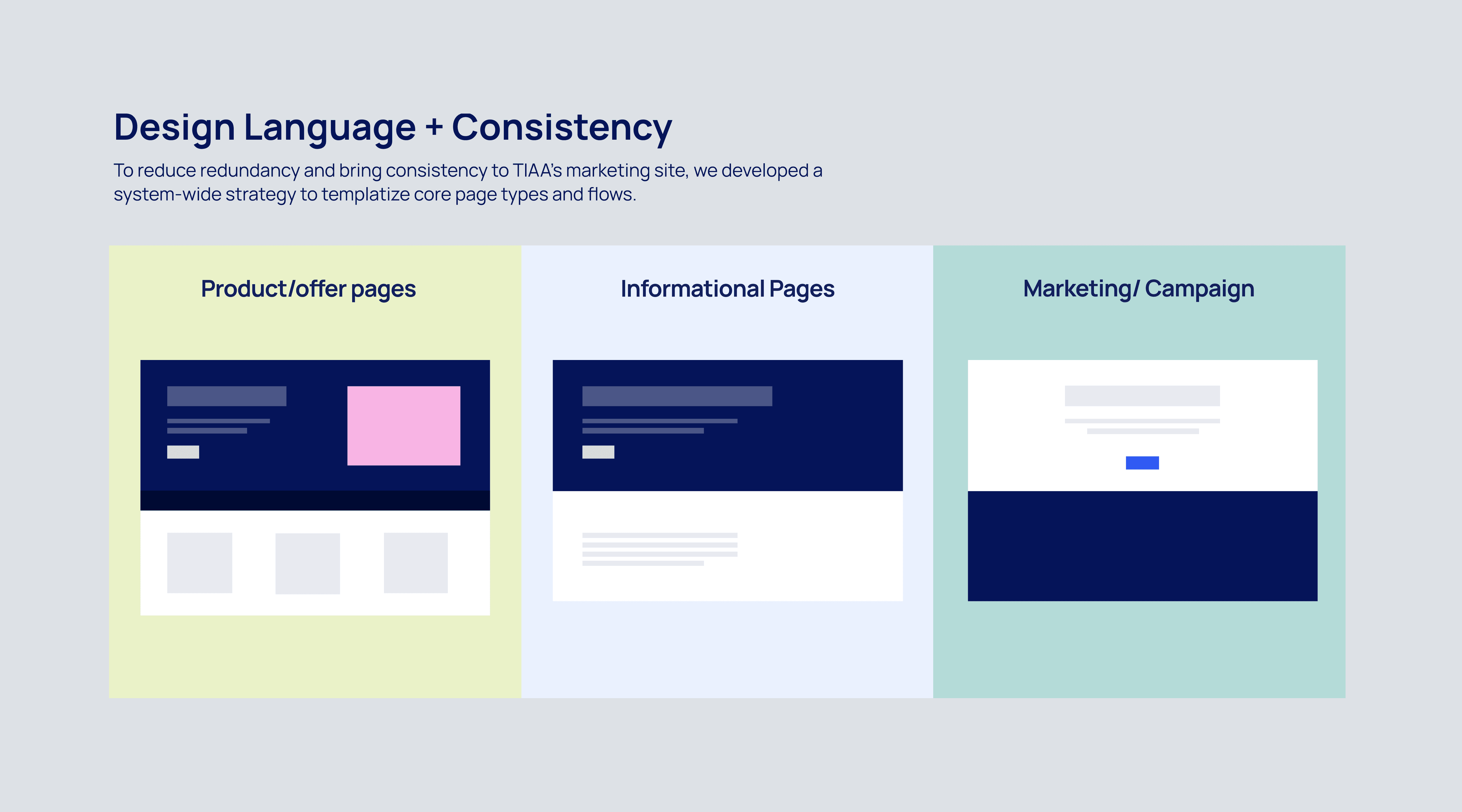
We introduced page and campaign templates built from approved patterns, with layout, hierarchy, and content logic already resolved. These templates were AEM-ready and designed to work across audiences, breakpoints, and brand palettes.
By turning pages into assemblies instead of design artifacts, teams could scale output, ship faster, and make updates 60% faster without redesigning or re-reviewing structure across TIAA.
Predictable scale instead of fragile growth
Templates turned scale into a repeatable workflow. Pages launched faster, updates became easier, and the rebrand held together as production expanded across TIAA.org.