TIAA
Platform UX
Reinventing Enterprise Navigation
Overview
My role
System design, Platform design
Team
Behavioral designer, Atomic design team, Engineeer partners
Duration
3-month 2025
Goals
Create clarity at scale
Help users understand where to go and what to expect across a large, content-heavy site.
Design for multiple audiences
Support distinct mental models for prospects, pre-enrollees, and participants without fragmenting navigation.
Standardize execution
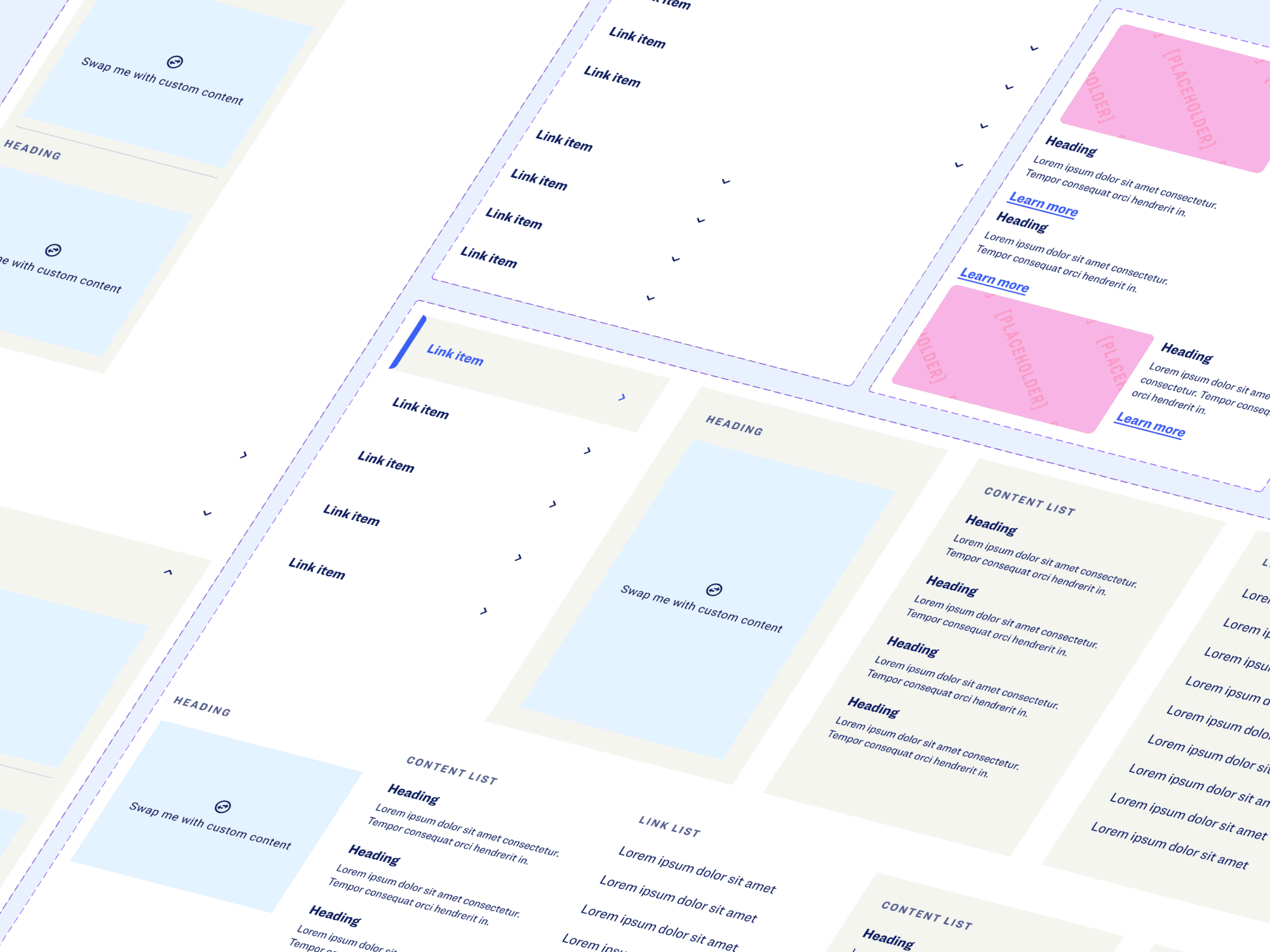
Replace bespoke megamenus with a single, governed system teams could reuse with confidence.
Original design
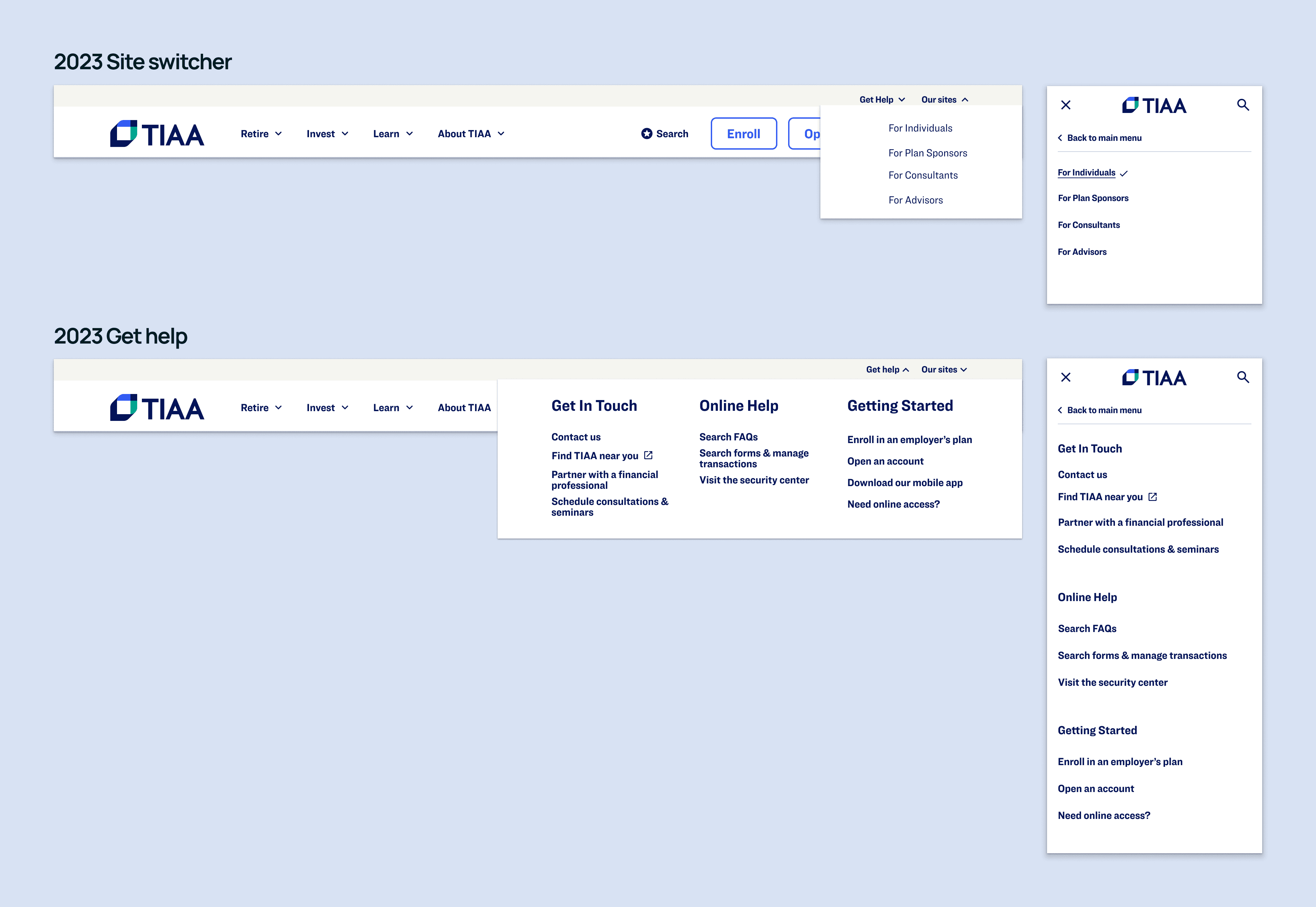
Initial findings
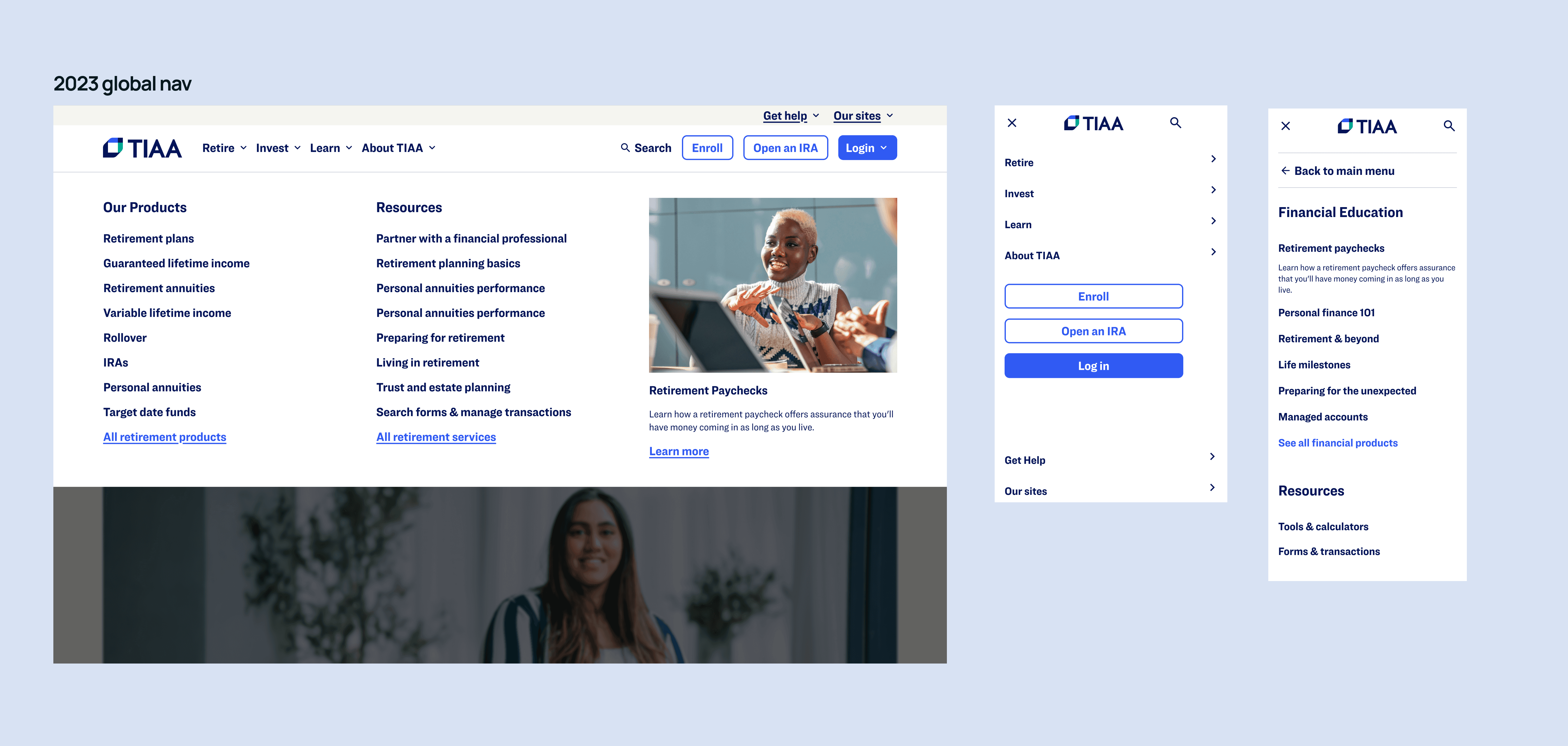
Labels did not match user expectations
Across audiences, users struggled to understand category labels and where certain content should live. Terms like “Insights” and “Wealth” were interpreted differently depending on context, making it harder for users to predict where information would be found.Structure broke down across audiences
Prospects, pre-enrollees, and participants approached navigation with different mental models. The existing structure did not flex well across these needs, forcing some users into unnecessary exploration or dead ends.Content-heavy dropdowns increased friction
Large, dense dropdowns made it difficult to scan and compare options. Users had trouble distinguishing primary actions from supporting content, especially when exploring products versus educational material.One-off solutions masked deeper system gaps
Teams routinely customized megamenus to support new initiatives or audience needs. While this solved short-term problems, it created long-term inconsistency and made navigation harder to reason about over time.Mobile navigation failed under real content load
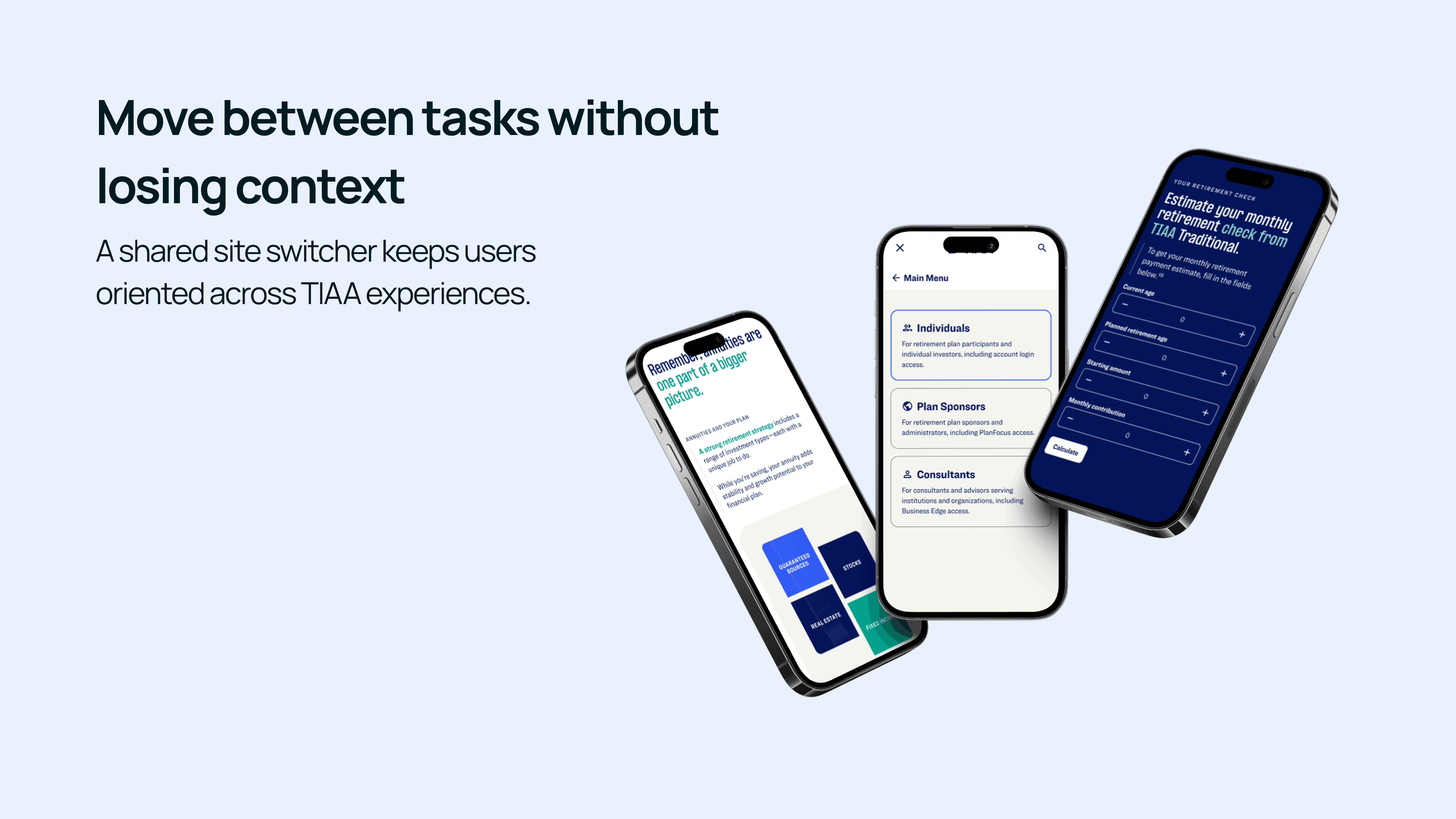
As content volume increased, mobile menus became harder to navigate. Deep nesting and long scrolls made it difficult for users to understand where they were or how sections related to one another.
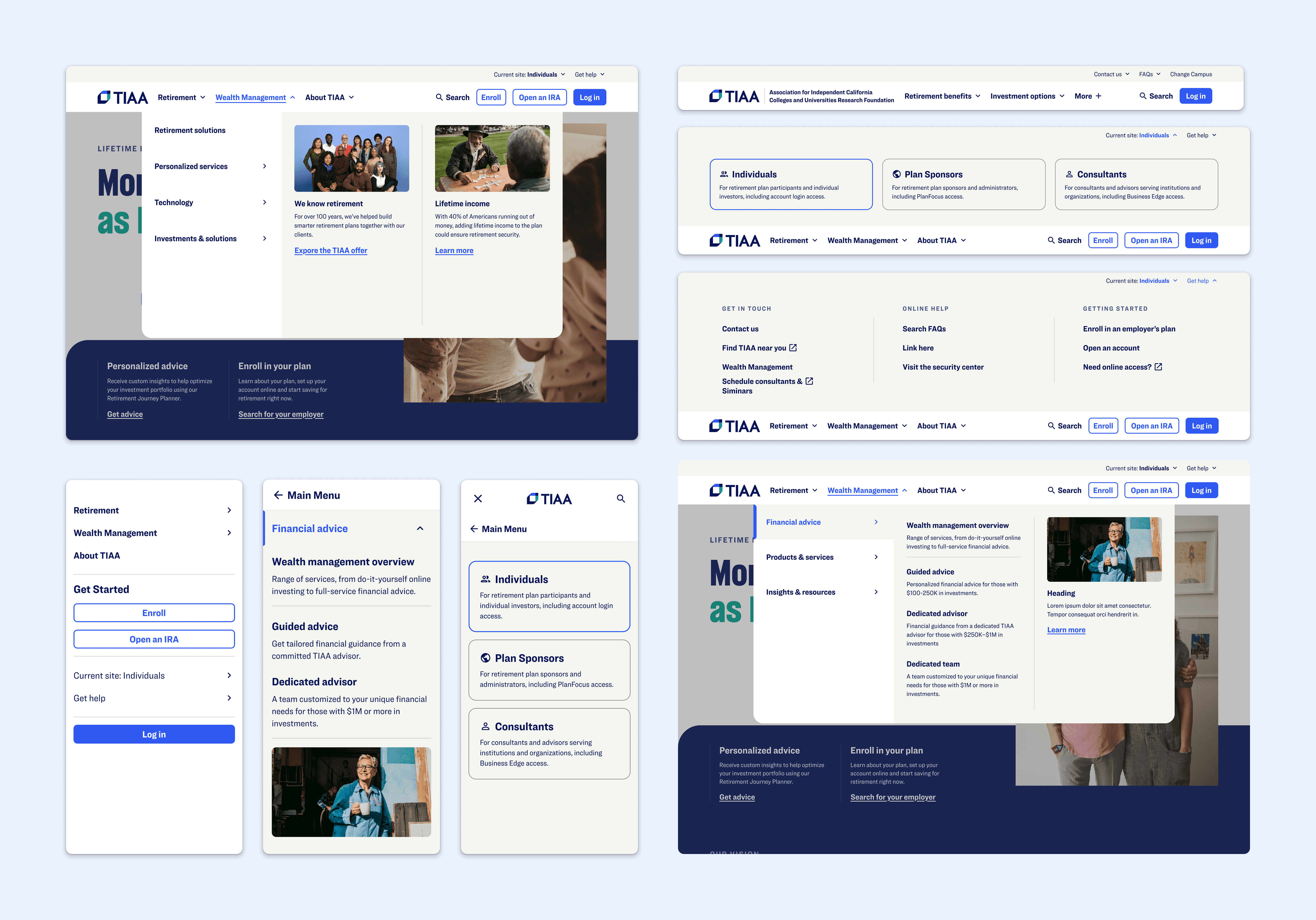
Navigation Became a Growth Lever
↓ 41% bounce rate through clearer content discovery
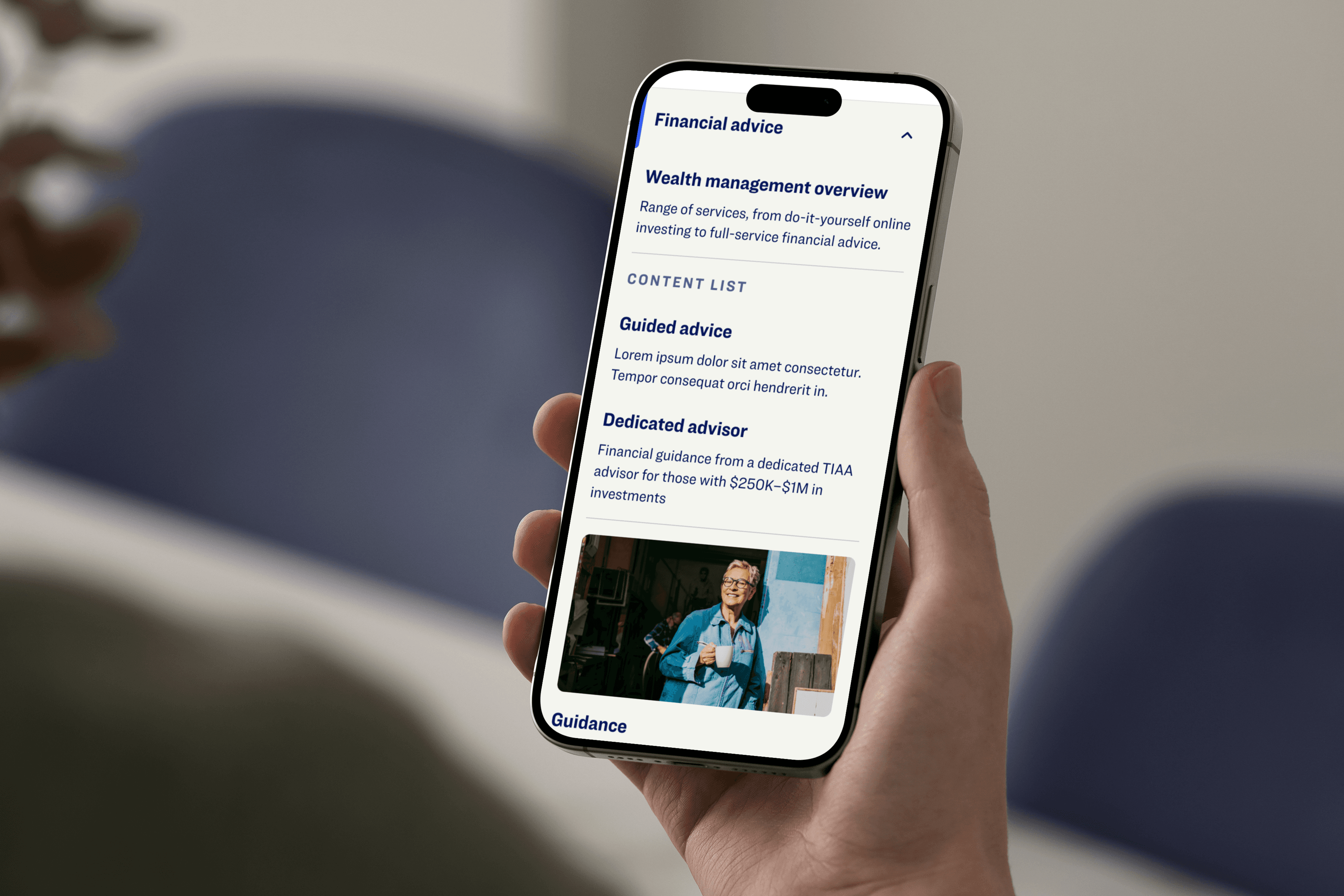
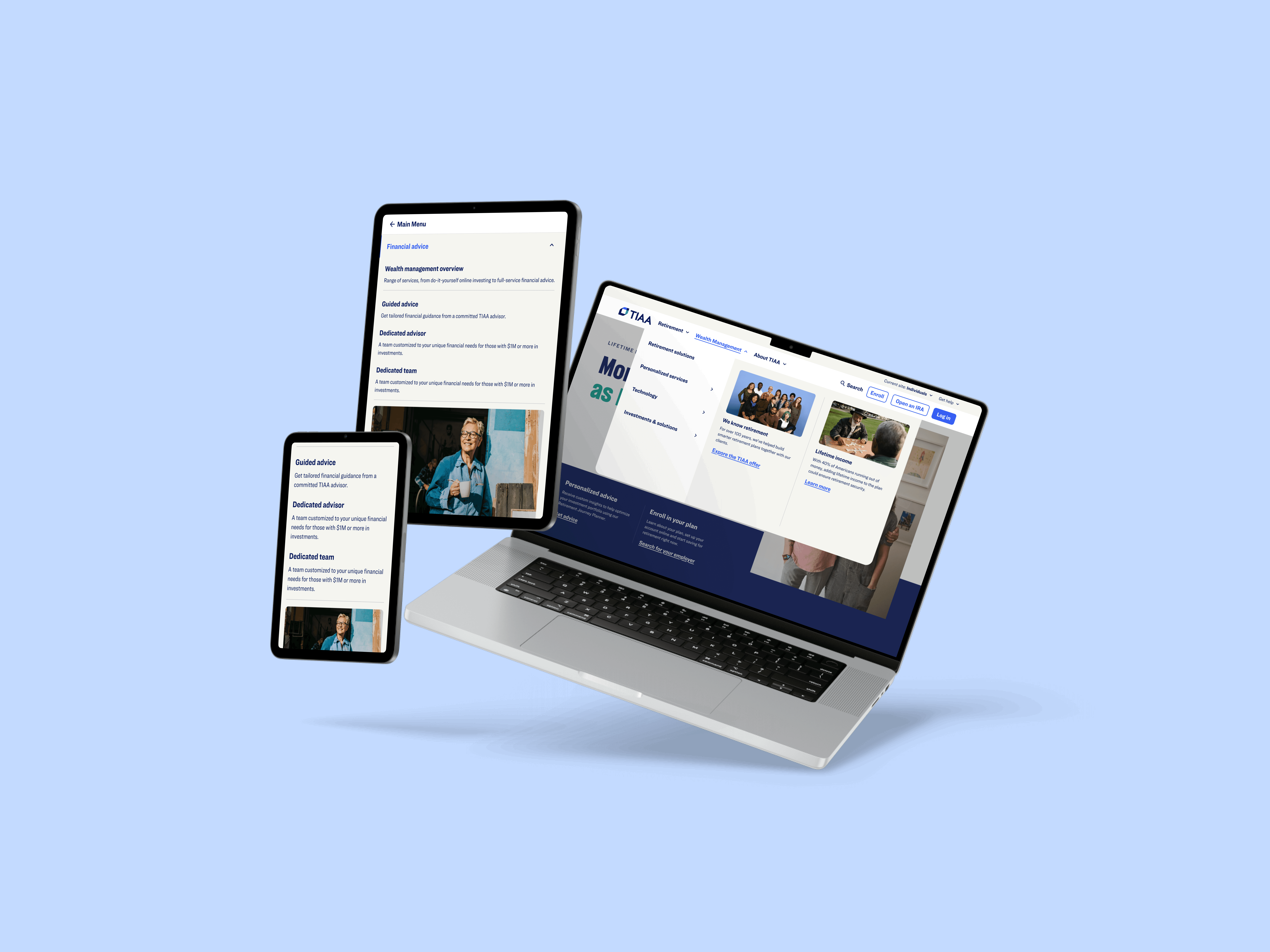
The modular Megamenu reduced cognitive load by separating orientation from exploration. Fixed top-level navigation anchored users, while flexible content modules helped surface relevant pages faster. Users were more likely to find what they needed without backtracking or abandoning sessions.
↑ 76% SEO performance driven by consistent navigation structure
Standardized navigation patterns improved crawlability and internal linking across TIAA.org. By replacing bespoke dropdowns with system-backed structures, content relationships became clearer to both users and search engines, contributing to stronger organic performance.
Faster delivery with fewer one-off solutions
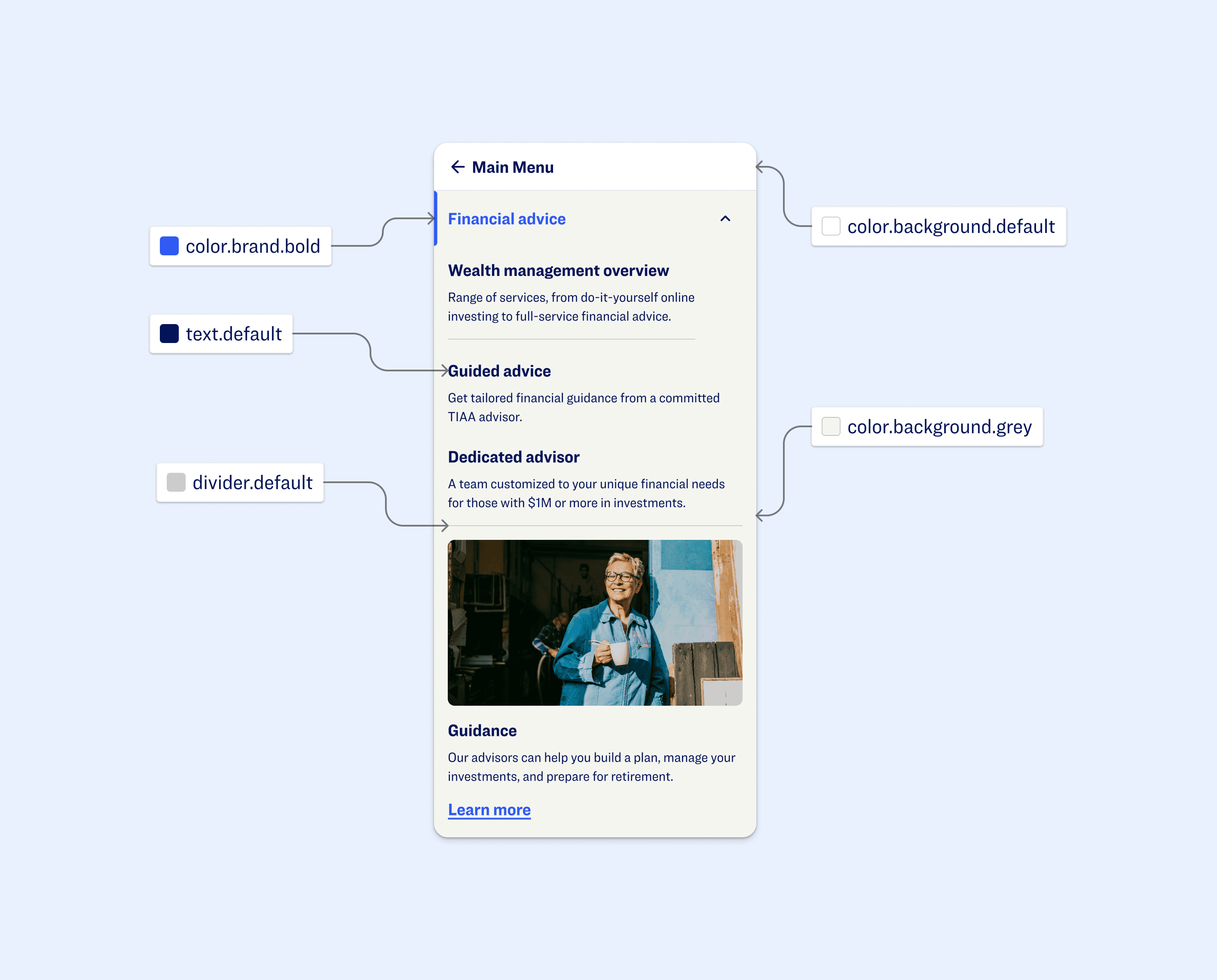
The Megamenu became a reusable system pattern rather than a one-off UI component. Teams shipped new pages and sections using pre-approved modules instead of custom navigation builds, reducing design and development overhead while maintaining accessibility and brand consistency.
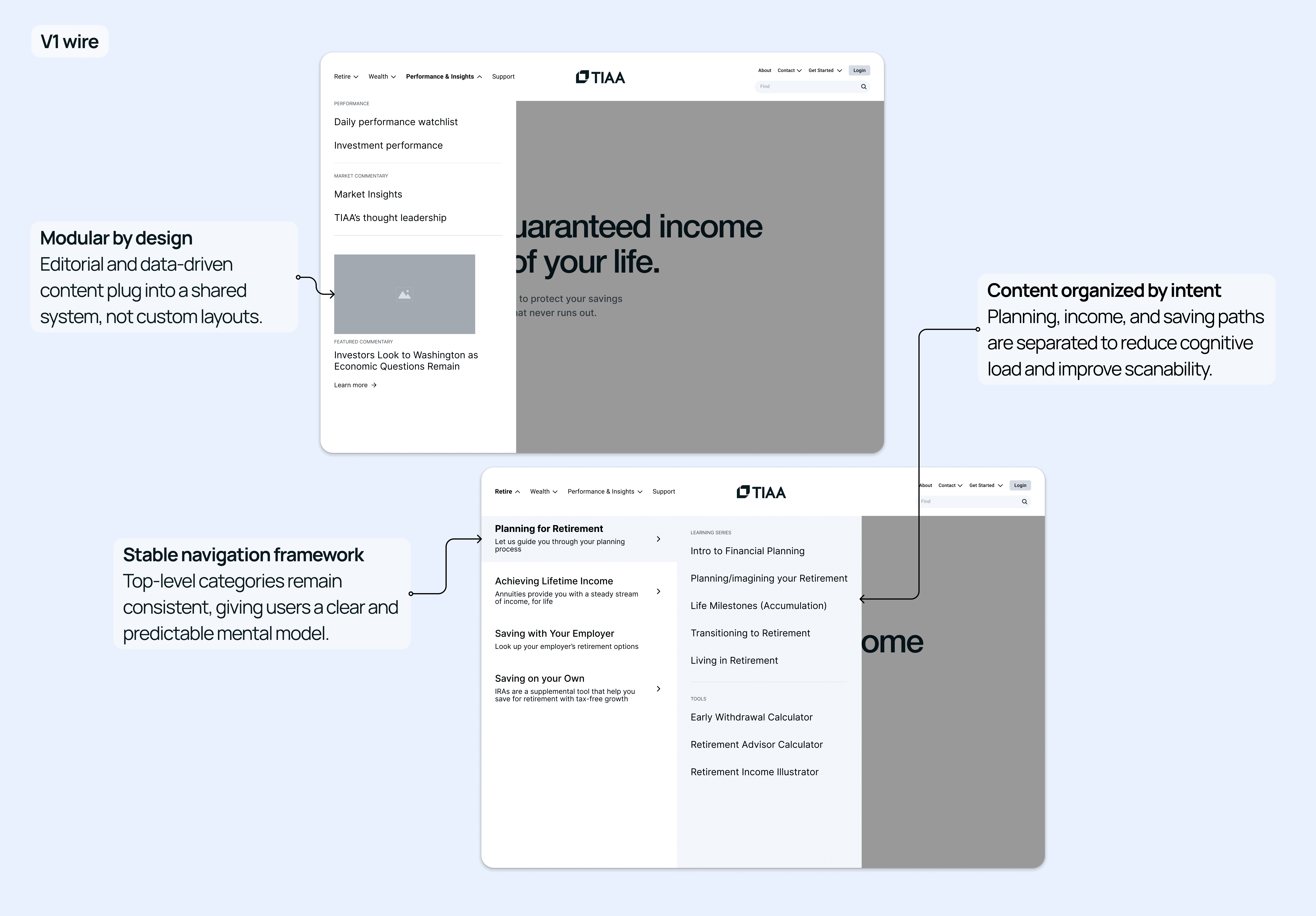
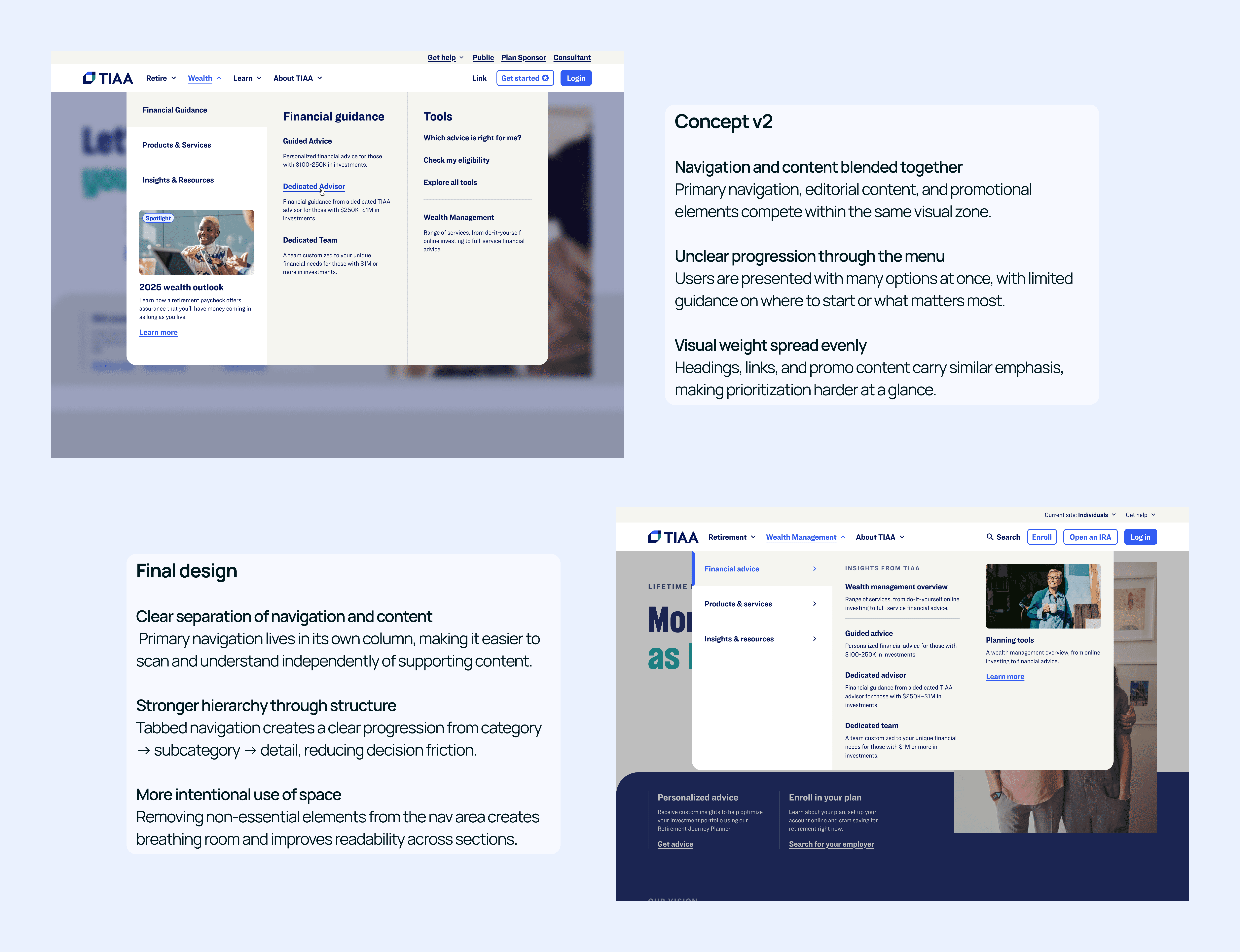
Navigation Became Infrastructure
The Megamenu shifted from a UI pattern to shared infrastructure. New content hubs, calculators, and long-form experiences could launch without rethinking navigation, allowing information architecture to evolve without disrupting users.
Teams Aligned Around a Single System
Design, engineering, and content moved from opinion-driven navigation decisions to shared rules. The Megamenu created a common language for how navigation works, making decisions faster, governance clearer, and execution more consistent over time.